Showing posts with label Charles Dickens. Show all posts

Wednesday, December 7, 2022

It was a Dickens of an Evening at the Historic Dock Street Theatre--Bravo Charleston Stage

It was a Dickens of an evening in the old French Quarter at Charleston's almost three hundred year old theatre venue. Standing on Church Street, positioned in front of the lighted, tall trees across the way, we had a magical view of the theatre doors and windows brightly lit with the colors of the season. The entranceway and box office lobby was busy with paying patrons filled with anticipation of what was yet to come. Their expectations would not be scrooged.

The original Dock Street Theatre opened in 1736. It was the first building designed for theatrical use in the Americas. Quite a privileged distinction that set it apart from all other theatres. One month after the it opened, Queen Street replaced Dock Street. However, the theatre retained its original name. The original theatre was probably destroyed by the Great Fire of 1740, along with many of the buildings in Charleston's French Quarter.

In 1809, it was replaced by Planter's Hotel, where wealthy planters stayed during Charleston's horse-racing season. In 1835, the wrought iron balcony and sandstone columns of the Church Street facade were added. After the Civil War, the Planter's Hotel fell into disrepair. It became a derelict building and nothing more than a shell slated for demolition.


In 1935, it went through a restoration. The new theatre was constructed within the shell of the Planter's Hotel. The new stage house and auditorium were modeled after eighteenth-century London playhouses. The local carpenters, who were put to work as a part of this Depression-era relief effort, utilized locally grown and milled native black cypress for the beautiful warm, wooden interior and used mantels salvaged from the Radcliffe-King Mansion. The theatre's second grand opening took place on November 26, 1937.

In 2007, a full-scale renovation brought the historic theater into the 21st century with state-of-the-art lighting and sound, modern heating and air conditioning, and new restrooms and seating. In addition, the theatre was made seismically secure and fully handicapped accessible. Extensive soundproofing was added to ensure that outside noises no longer intruded on performances inside. It reopened in March 2010, ready to dazzle and gratify its patrons with a taste of Broadway.

Dock Street Theatre became the home for Charleston Stage, its resident performing arts group, in 1978. Ironically, their first show in 1978 was a production of A Christmas Carol. However, this year's production is brand new, with all new sets, costumes, and updates to Wile's original script adaptation. The stunning scenery features a dozen hand-painted drops and sets created by Guest Scenic Designer Susan Crabtree, faculty member of the North Carolina School of the Arts and one of America’s premier scenic painters. Over 80 original, colorful costumes have been built by Charleston Stage's professional costume staff and designed by Guest Costume Designer Janine McCabe, chair of the College of Charleston’s Department of Theatre and Dance. While the score features many familiar traditional carols, Charleston Stage's Resident Music Director, Sam Henderson, has created new and bright arrangements and orchestrations for each number.

Guest Actor Gabriel Wright, a former Resident Actor with Charleston Stage, now appearing on behalf of the Actor's Equity Association, played the squeezing, wrenching, grasping, clutching, covetous, old sinner Ebenezer Scrooge, who was solitary as an oyster. Gabriel walked the walk and talked the talk of the old, cold-hearted miser with masterful poise. He was surrounded by an energetic and up-to-the-task cast consisting of Cody Elsensohn as Bob Cratchit, Raymond Cronley as Fred, Brietta Goodman as The Ghost of Christmas Present, K'nique Eichelberger as Young Ebenezer and The Ghost of Christmas Future, Louie Chaplin Moss as Tiny Tim, and Jenna Barricklo as Belle.

Other talents included Acting Ensemble Member Colin Waters as The Ghost of Christmas Past, and former Resident Actor Patrick Brett as Jacob Marley. Over twenty additional actors from the Resident Acting Company, Charleston Stage Performance Troupe, and local community rounded out the cast as the Ensemble.

There is nothing humbug about Charleston Stage's heartwarming adaptation of  Charles Dickens timeless story of redemption and transformation. You will be thoroughly entertained by its colorful and artistically presented production. Without a doubt, the cast successfully connected with their appreciative audience. I will give you this one parting valuable hint, pay close attention to the initial arrival of each ghost.

135 Church St, Charleston, SC

Nov. 30 - Dec. 21, 2022

Purchase tickets.

Friday, October 12, 2018

An October Visit To The Once Upon A Time Wealthy Bleak Hall Plantation--Facts And Lore

Bleak House in the book
One of Dickens' finest novels, Bleak House was inspired by an actual court case in the English judicial system that dragged on for more than 50 years. It combines two tales: the story of wealthy Lady Dedlock and that of penniless Esther Summerson. The haughty noblewoman of Chesney Wold and the orphan housekeeper of Bleak House become entangled by the court case Jarndyce and Jarndyce, a mess of disputed wills and disrupted inheritance that has tied up the High Court of Chancery for decades. The story has a twist in it--Esther Summerson has a distinctive interconnection with Lady Dedlock, and I will leave it there.

There is some contention as to the real house that was the inspiration for the house in Dickens' story. A house located in Broadstairs, England, was a consideration. Dickens stayed with his family at this house (then called Fort House) for at least one month every summer from 1839 until 1851. However, there is no evidence that it formed the basis for Bleak House, particularly as it is so far from the location of the fictional house. The house sits on a cliff overlooking the town's waterfront on the Isle of Thanet. It was renamed Bleak House in honor of Dickens.


An 18th-century house located on Folly Lane in St Albans, Hertfordshire, the place where Dickens wrote some of the book, has also been identified as a possible candidate for the house in the story since the time of the book's publication and was known as Bleak House for many years.


Dickens' Bleak House story became a part of the Lowcountry's Sea Island history around the same time of its publication in 1852. In the late 1790's, a parcel of land located between today's Seabrook Island and Edisto Beach was being developed by Daniel Townsend III, who built a mansion on the property in 1805.

In 1842, his son, John Ferrars Townsend, inherited the plantation and became one of South Carolina's largest planters of Sea Island cotton. His cotton commanded a high price from lace-makers and won several prizes for both its quality and its length. Townsend was also a political leader serving in the South Carolina Senate, South Carolina House of Representatives. He attended the Secession Convention as a delegate and signed the Ordinance of Secession.

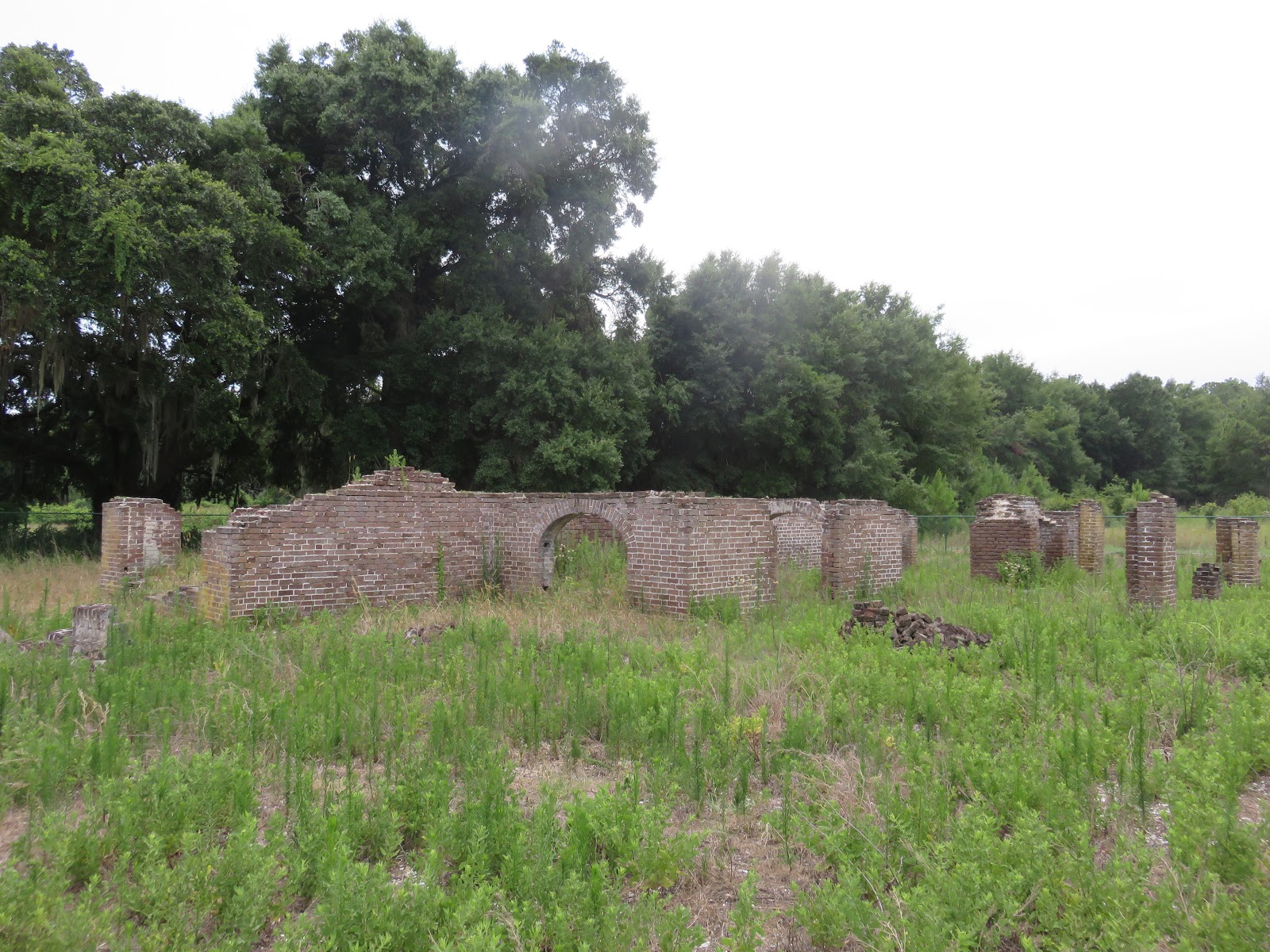
John Townsend was an admirer of Dickens. As a result, he was inspired to name his plantation after the house in Dickens' story with a slight difference, Bleak Hall. The original great mansion of Bleak Hall was two-and-a-half stories high on a raised basement. A distinguishing feature of the mansion, a cupola, was later added after the house was built so the homesick bride of one of the Townsends could look across the river to her former home on Wadmalaw Island. It towered over the surrounding oriental gardens and the now famous ice house, which still exists and is an outstanding example of Gothic revival architecture.

At the outset of the Civil War in 1861, by orders from the Confederate government, the steamboat "Beauregard" evacuated everyone from Edisto Island and the plantations. Both Confederate and Union troops used the cupola on Bleak Hall as a lookout. At the wars end, the plantations laid devastated. The valuable silver, china, and furniture that was left behind by the Townsends were carried away or destroyed by Freedmen and the Federals. When the Townsends returned in 1866, the house was occupied by former slaves. Shortly thereafter, it burned down. A new one was built in its place, but later torn down and a modern house was built nearby, which also disappeared in time.


Like all Southern plantations, legends abound. One involves a "bee hive well" called Jacob's well--a well surrounded by a wall of tabby with a steeple-shaped roof and the name "Jacobus Fecit" cut into one of its sides. In its early days, it was rumored to be a place where lovers secretly rendezvoused. It is believed a little gray man stands guard over the well to keep its waters pure and only allows the "pure in heart" drink from it.


Another story involves the plantation cemetery located at the fork in the road where you turn right to go to Bleak Hall or left to go to Sea Cloud--another plantation located nearby. After leaving a clearing, you enter a narrow road surrounded by dense undergrowth and trees. Here you will feel the first wave of hot air hit the back of your neck, then again and again until you leave the area. The slaves believed this hot air to be the "Hags breath" and if you linger, she will cast a terrible spell that could even cause your death.

A third legend speaks of a Portuguese man wearing large gold earrings and a red bandanna fashioned into a turban who roams the shores of Botany Bay. Seven of his victims were discovered on the beach--all of them standing straight up in the sand.


And then, there is the Mystery Tree. It is located at the entrance of the road that led to Bleak Hall and Sea Cloud Plantations. Those who have seen it are amused by the oddities that decorate its branches, which mysteriously change from time to time. Some have suggested it to be an object known to the Gullah culture as the bottle tree. In the African culture, bottle trees are placed in a spot where evil is known to have dwelt. The tradition purports evil crawls into the bottles to destroy the beauty it reflects, becomes trapped, and is destroyed by the illumination of the rising sun. It is true the Botany Bay plantations owned slaves during their Antebellum period to work their sea island cotton fields. As to the Mystery Tree, I have not seen bottles on it to suggest this belief. 

Today, Bleak Hall and Sea Cloud have been combined to form the Botany Bay Plantation--a wildlife preserve consisting of 3,373 acres. Formed in the 1930's by Dr. James Greenway, it got its name from the barrier island that was near, but not a part of the Bleak Hall property--Botany Bay Island. Some of the island's previous names were Tucker Island, Watch Island and Clark's Bay. The last owners, John and Margaret Meyer, deeded the property to the state.


Botany Bay Island was much larger in the early days of Bleak Hall Plantation--covered with an impenetrable tropical jungle of wild oaks, palmettos, and cedars just twenty yards from the shoreline. Over the years, the ocean has encroached on the land. Now, only a narrow, pristine strip of beach two miles long and lined with a sun-bleached bone yard of weatherworn dead timber remains--loved by photographers. It was separated from the large plantation by an inlet and a smaller island named "Porky," a shortened name from "Pour-quoi." While crossing the marsh to the beach, you will pass an outcropping of trees and plants called Hammock Island. The beach was significantly eroded by Hurricane Matthew and was closed for awhile, but has since opened.

Botany Bay Plantation is a magical place with a secluded beach unsurpassed on the Atlantic coast and located on Edisto Island not far from Edisto Beach. In fact, from Botany Bay's shell-covered beach you can see Edisto Beach to the right and Seabrook Island to the left.


You can take a tour of Botany Bay Plantation featuring 15 points of interest by car. Keep an eye out for the Portuguese man and do not linger near the cemetery if you feel a waft of hot air on the back of your neck.

Sunday, June 5, 2016

"Oliver" Will Warmly Pick The Pockets Of Your Heart--Now Showing At the James F. Dean Theatre

First published as a serial from 1837 to 1839, Oliver Twist became Charles Dickens second novel in 1838. A story about an orphan named Oliver, the boy starts his life in a cruel workhouse where he is branded as a troublemaker after asking for more gruel and then sold into an apprenticeship with an undertaker. He escapes from there and travels to London and meets the Artful Dodger, a member of a gang of juvenile pickpockets led by the elderly criminal Fagin. As the story progresses, a bit of a "twist" is revealed--a turn in the plot that may have influenced Dickens in the naming of his main character.

Actually there are varying explanations for the name Oliver Twist. In the story, Mr. Bumble randomly picked the name Oliver for the orphaned child and used an alphabetical system to come up with Twist. Twist could also be a play on the words "all of a twist." However, Oliver and his name may have been based on a young workhouse boy Dickens knew while growing up named Peter Tolliver.

In 1960, the story was loosely turned into an English musical called Oliver with music and lyrics by Lionel Bart. It premiered in the West End of London and enjoyed a successful long run. In 1963, David Merrick brought Oliver to Broadway. Since, there have been numerous tours and revivals, and now has found its way to the humble stage of the James F. Dean Theatre.


The Flowertown Players successful and entertaining opening night production of Oliver was a coordinated group effort of 30 youngsters and adults nicely choreographed and musically orchestrated by director Jenney Aubrey and Company. With a Victorian London skyline painted across the upper portion of the stage for a backdrop, Kem Welch's realistically appointed set, constructed by Chrissy and Ernie Eliason, fostered the crucial atmosphere for this period piece based off of the inspirations and recollections of England's beloved writer of the 1800's.

As the story of Oliver's life and travels were paraded across the stage from the workhouse scene to the streets and establishments of Gothic London, the constantly changing scenes were managed with precision by Ashley-Ann Woods and Crew.

Aiding visually to the play, Nicole Harrison's cleverly designed costumes from the workhouse orphans to Mr. Brownlow are imaginative and fittingly portray the dress and styles of London's 1800's social hierarchy as Charles Dickens would have seen it.

The capable cast of performers infused Oliver with high energy and dedicated passion. It is unmistakably obvious each and everyone of them thoroughly enjoy doing the show and go all out to sell the plays song and dance routines.

Jonah Streff, in his first singing role with the Flowertown Players, is the epitome of Oliver. Meaning, if I were to picture in my mind what the real Oliver would have looked liked according to the imagines of Dickens, Jonah would be it, and of course, the costume greatly helped in this regard. He hit the right notes in his rendition of "Where is Love?", when Oliver was forced to sleep on a coffin and his collaboration with Sam Daniel, The Artful Dodger, in "Consider Yourself", when he is invited by the kindly pickpocket to come and live in Fagin's lair--definitely a play favorite and admirably executed by Sam Daniel.

Fagin (Bill Terranouk) is an elderly criminal who oversees the gang of young pickpockets. When Oliver is brought to him, he teaches the boy their ways. Cloaked in a tattered overcoat and haloed in a briny appearance, Bill Terranouk, in a crusty grumble, delivered his signature songs of the play "You've Got to Pick a Pocket or Two" and "Reviewing the Situation."


Some of the more unsavory characters Oliver interacts with include Mr. Bumble, the workhouse manager, played by Fred Maidment and Widow Corney, played by Kate Berrio, both heartless and greedy individuals. Fred and Kate are paired in one of the more humorous songs of the play, "I Shall Scream", where Kate showcased her expressive facial skills ranging from flirtatious to standoffish. Then, sold by Mr. Bumble, Oliver comes in contact with the equally unpleasant Mr. and Mrs. Sowerberry (Charles Soderlund and Gretchen Gabriel). But the most odious of the characters is the brutal Bill Sykes (Jason Olson), introduced into the play by the song "My Name". He commits the worst of offenses, murder.

Not all the characters Oliver confronts are interested in what they can do to him rather than what they can do for him. Mr. Brownlow (Chad Estel), a victim of the young pickpockets, and Bet (Casey Dorman) ultimately seek Oliver's best interests. Mr. Brownlow is a key part of the twist in the story line.


Finally, there is the unfortunate Nancy, who also has a tender heart. Unfortunate because she loves Bill Sykes and tender because she ultimately seeks to do right by Oliver and makes the ultimate sacrifice. Nancy is played by Sarah Daniel, who is no stranger to the stage and is the lead singer in a local Summerville band. She partakes in two of the plays favorite songs--the lighthearted "Oom Pah Pah" and the highly emotional "As Long As He Needs Me." One, bringing out her playful side and the other, her passionate side--highlighted by powerful vocals.


Honorable mentions goes to Ben Soule for his portrayal of Charley Bates. Ben was a delight to watch and his enthusiasm was indisputable as was the entire group of young actors in the opening number of "Food Glorious Food."


Oliver is the Flowertown Players at their best. It will warmly pick the pockets of your heart and leave you repeating the orphan boy's opening words "Please, sir, I want some more."

Showing June 3-19. Purchase tickets for Oliver.

Tuesday, October 16, 2012

Third Thursday's Surprise Event Will Bring A Bit Of The Dickens Out Of You-October 18, 2012

 
What the dickens is going on this Third Thursday in beautiful Summerville? While Charles Dickens has long been famous for coining some of the most creative character names in English literature and propelling hundreds of new words and expressions into our language, he is not credited with coining the word dickens. Where am I going with this and what the devil does dickens have to do with Third Thursday? If the question is leaving you somewhat "flummoxed", the answer is going to give you "the creeps." Hopefully, the partakers won't experience a case of "butter-fingers."

Summerville DREAM, our illustrious host of Third Thursday, is teaming up with Art and Soul of Summerville for the presentation of a somber procession based on a character fabricated by Charles Dickens. They will be putting to rest the money-loving business partner of Ebenezer Scrooge, Jacob Marley. It will begin on Short Central near OLacey's Pub promptly at 6:00 pm. Short Central is a fitting setting for this Dickens inspired event. Its brick pavement, little shops, and local pub gives it a somewhat English flare, with a little imagination thrown in. Now, if the weather cooperates and produces a misty fog, the scene will be near perfect. The procession will proceed up Short Central and end at Richardson Square where a eulogy will be delivered and a dirge will be had at 6:30 pm. Hopefully, Marley will stay put, but I wouldn't be so foolish as to put a wager on it.

After paying your respects to Marley, take a short walk to 112 S Main Street. It is the address of  A Very Little Bookstore. When I visited this bookstore for the first time, it reminded me of  The Shop Around The Corner from the movie You Got Mail. In the movie, The Shop Around The Corner was a small, privately owned bookstore that suddenly found itself competing against another bookstore called Fox Books, a conglomerate similar to powerhouses like Amazon, Borders, and Barnes and Noble. It was a quaint store where the owner and customer knew each other personally and was a central part of the community. The staff was knowledgeable and neighborhood children were entertained by scheduled book readings.

When I walked through the door of A Very Little Bookstore, I got the same impression. The store inside and out screamed kids. The walls were lined with cabinets of different heights and shapes and packed with books of varying sizes and colors written by many different authors. Co-owner, Natalie Sober, was out on the main floor talking to the patrons, fielding questions about book titles, and sharing her own personal viewpoint on favorites. Children were sitting at small tables thumbing through their chosen picks.


During my brief conversation with Natalie, she emphasized the popularity of children's books by local writers and the numerous requests she gets for them. The bottom line for this little bookstore, adjacent to Hutchinson Square on Little Main, is the satisfaction it gets from promoting to children the joy of reading and then seeing the excitement on their faces when they take the book into their hands.

So, take that short walk and meet the Sober's. Smell the print, feel the paper, see the story. No better time to immerse yourself into someone else's wonderland than on a Third Thursday. And bring your little dickens with you.

That's not all. Summerville DREAM has conjured up more for your entertainment. Everywhere you go, every corner you turn in downtown Summerville this coming Third Thursday, there will be a street vendor fair and performances by Summerville's Got Talent contestants. Now, all you have to do is show up and show support for our local businesses. And don't be a Scrooge about it either.

Final note: The word dickens is often used as a substitute for devil or an imp, and in reference to children usually used affectionately.