Wednesday, December 30, 2020

In Charleston, the Truth Lies Somewhere Between the Cooper Sunrise and the Ashley Sunset

Charleston's antiquity runs as deep as its harbor waters and its tales are as tall as the steeple of St. Phillips on Church Street. As one of the oldest cities in America, it is a place where reality and legend walk the same streets declaring a timeless story about the lives of its progeny and their hallowed structures. A place where fact and fiction have been skillfully blurred to the delight of those who come to bask in its charm and grace. This article is about some things you will hear on a horse-drawn carriage ride or walking tour that simply is not likely to be true.

Over the course of 300 years, the Pink House has proven itself resilient. It survived over thirty hurricanes, two major earthquakes, two wars, and multiple catastrophic fires. It has a must-see courtyard designed by Loutrel Briggs and a picture-perfect view of St. Philip's steeple through a window.

Like many old Charleston landmarks, it has acquired a ghost story or two. The apparition sighted and from time to time photographed, is that of a female figure wandering and pacing back and forth as though waiting for something or perhaps someone. Some believe the sightings are the spirit of one of the women who once worked at the property during its tavern and bordello days, and others believe it to be the ghost of the female pirate Anne Bonny. According to the narrative, she resided on the third floor and ran a popular business on the floors below. There are several variants to the story of Anne Bonny. The following tale is the most popular.

Born in Ireland, the red-headed Anne is believed to be the illegitimate daughter of attorney William Cormac and his housekeeper. To escape the backlash the sordid situation created, Cormac left Ireland with his mistress and his daughter. They sailed to Charleston.

Anne was a handful for sure and had a fiery temper. While married to James Bonny, a small-time pirate and informant, she became involved with Calico Jack Rackam. To avoid a beating by her husband because of her affair, she ran away with Rackam and joined his pirate crew on a ship they stole in New Providence called the William.

Mural at Pirate Cove Playground, Folly Beach
In 1720, Jonathan Barnet attacked Rackam's ship and took him prisoner with Bonny, Mary Read, and the rest of the crew. The punishment for piracy in the 18th century was execution by hanging. One by one, her friends perished, including Calico Jack, but Bonny and her close friend, Mary Read, pleaded they were both pregnant. The court spared Bonny and Read from hanging like the others. She began to serve her prison sentence and gave birth, but there is no record of Bonny's release, execution, or death. This has fed speculation as to her fate.

After everything has been searched and said, a Post and Courier article, The true and false stories of Anne Bonny, pirate woman of the Caribbean, summed up Anne Bonny's story this way, "Nearly three centuries after Anne Bonny's trial, we know that a woman named Anne Bonny was alive in the early 1700s, that some people called her Ann Fulford and Bonn, that she lived in the Bahamas for a time and joined a pirate crew."

"We don’t know whether she ever lived in Charleston, who her parents were, whether she married a man named James Bonny, her true role aboard the pirate sloop, what her relationships were with Jack Rackam and Mary Read, and whether she ever was released from the Jamaican prison." Often times, the legend becomes larger than life. In Charleston, the truth lies somewhere between the Cooper sunrise and the Ashley sunset.


This is true of one of Charleston's oldest townhouses located at 143 and 145 Church Street. It was built by Huguenot merchant Alexander Peronneau as a double tenement around 1740, likely after Charleston's great fire of 1740. The material used in its construction was Bermuda stone placed on a brick foundation. Bermuda stone was widely used in the construction of early Charleston. The city's old fortification wall was made from Bermuda stone, as was the 1769 seawall, which was probably destroyed in the 1800s by a hurricane.

In the late eighteenth century, the double tenement was owned by craftsman and planter Paul Smiser. Next, Mrs. Goodwyn Rhett took possession of the property. In 1928, Mrs. Rhett restored the home to a single residence with Thomas Pinckney's help, a local African-American builder. Outbuildings located behind the primary residence were constructed using salvaged brick from the former Shepheard's Tavern on Broad Street, also called The Corner Tavern, which was demolished in the same year.


It is believed, after the restoration of the house, rumors began to circulate claiming pirates lived there in its early days and used an underground tunnel system located in its basement that was connected to the waterfront of the Battery. The rumors stated the tunnels were the primary means of smuggling and escaping by the pirate visitors. During extensive renovations and the redirection of Charleston's sewage systems in the 1930s, the tunnel was filled with sand, as the story tells.

One rumor claims Blackbeard's legendary cache of gold is buried somewhere within the tunnel or in the basement of the house, which remains highly suspect because facts lean toward the presumption Blackbeard never set foot on the Charleston peninsula. As to the assumption pirates stayed there, Charleston's pirate days had ended by 1720. Although, sailors could have stayed at the tenement. However, search as you may, no legitimate evidence has been found to support such claims.

It is hard to say with any surety who visited the double tenement at 143 and 145 Church Street and what happened there. The name Pirate House became attached to the address due to the undocumented stories. Despite contrary facts, it will forever be known as the Pirate House, and the rumor will prevail with those who choose to believe. And to those who choose otherwise, in Charleston, even the truth is legendary. The house at 37 Meeting Street has similar stories.


The single house is an architectural style found almost exclusively in Charleston. The design is responsible for much of the city's unique charm. The floor layout was perfect for the narrow street-facing lots originally laid out in Charleston in the late 17th and early 18th centuries.

The single house is only one room wide and two rooms deep on each of its levels with a central hall between them. They were purposely built with the piazzas facing south or west to get the cooling, prevailing breezes from the sea. It runs the length of the house with a public door facing the street at one end. Visitors would enter the home through this street entrance and traverse the porch to the home's centralized private door. Entertaining was done on the second floor, further from the dust and noise of the street.


While walking or riding the historic streets of the city, a tour guide might tell you single houses were a reaction to the city taxing street frontage, but truth be told, it had more to do with the efficient use of limited real estate in the confines of a peninsula. A Charleston County Public Library article entitled The Charleston Single states, "Early Charlestonians developed the single house as an ingenious solution to the various demands of their unique urban landscape: a house that provided privacy, ventilation, fire protection, and social status within the confines of a tightly restrictive public space."

Thursday, December 24, 2020

Charleston's One-time Fort Sumter Hotel—An Ideal Location and an Intriguing History

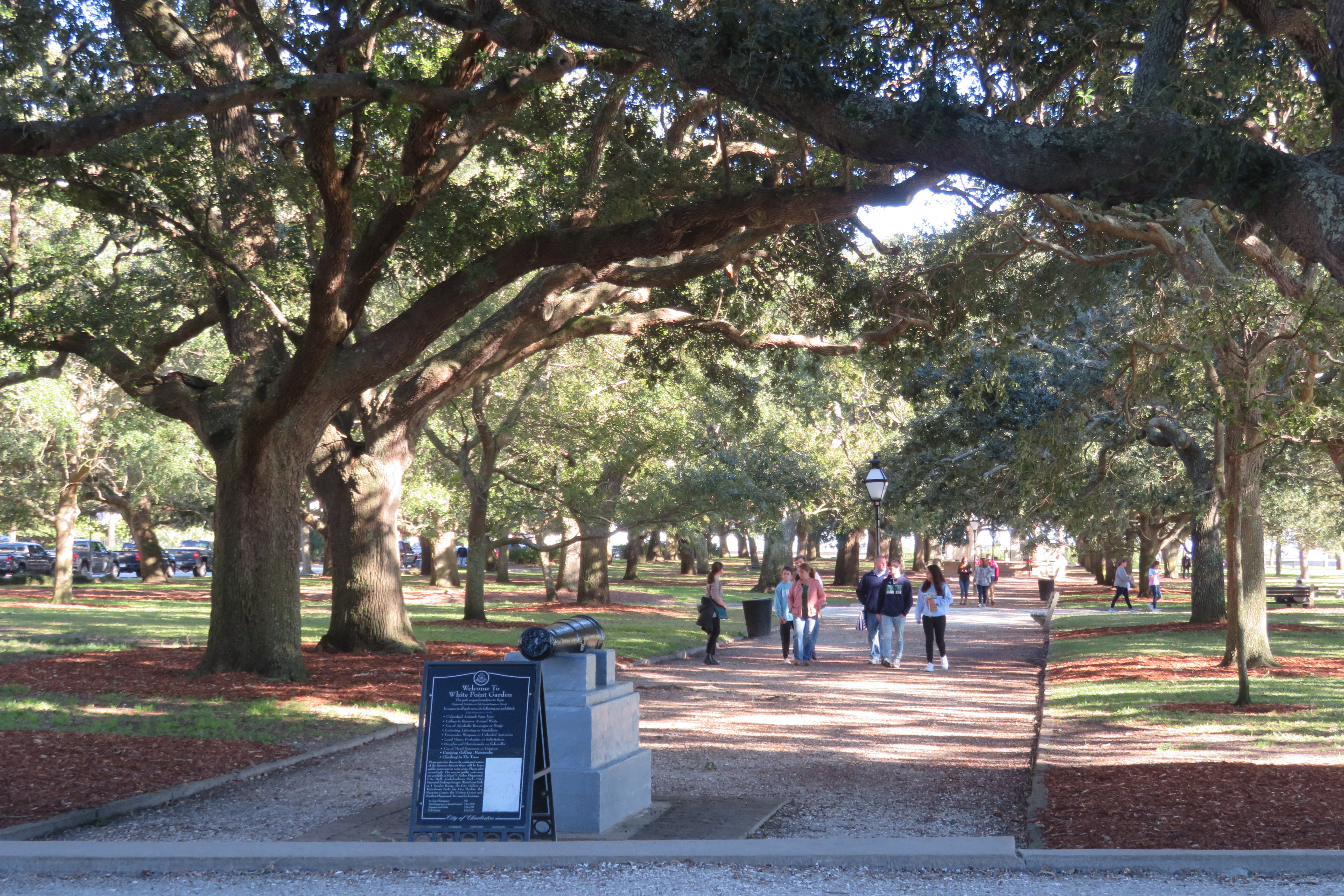
If you like history and intrigue, you will like this story about an old Charleston landmark. Its address is 1 King Street. It is flanked by the Black Pearl on one side and the iconic South Battery thoroughfare on the other side. Its front yard is the historic oak-filled oyster-shelled pathways of White Point Garden.

When built in the early 1900s, it was the tallest building in Charleston at seven stories high. As you stroll past its front entrance, you will notice a plaque next to the door with the name Fort Sumter House imprinted on it. You will not be able to enter. It is a private condominium complex. However, in 1924, the year it opened to the public, it was a hotel called Fort Sumter.


The Spanish Colonial-style structure was designed by prominent commercial architect G. Lloyd Preacher of Atlanta, GA, and built at a cost of $850,000. A brochure from 1929 advertised the Fort Sumter Hotel as "Charleston's Only Waterfront Hotel." It was described as having "spacious lobbies, sun parlors, and terraces, comfortably and luxuriously furnished, overlooks the water and offers cordial hospitality in an atmosphere to be found in few hotels." It had two hundred outside guest rooms, each with a combination tub and shower, and comfortable beds equipped with Spring air mattresses.

Among its amenities were a distinctive ceiling of worm‑eaten pecky cypress, a ground‑floor dining room illuminated by soft light radiating from three tiers of stately electric fixtures, and an expansive grand ballroom and lounge on the second floor. The lobby featured pinkish‑beige marble flooring throughout. The original corridor running from the front door to the back of the building was known as “Peacock Alley.” Rare for the era, the hotel offered air conditioning and served drinks chilled with “manufactured ice.”

Fort Sumter Hotel’s Terrace Dining Room operated under the expert direction of a renowned chef. Its cuisine featured the choicest fresh seafood and celebrated Southern dishes, and it proudly touted its use of ice refrigeration to preserve flavor. In 1954, the Rampart Room replaced the hotel’s main dining room. Designed as an informal lounge for casual dining, it incorporated several historic touches, including a large mural depicting the bombardment of Fort Sumter. The Rampart Room offered menu items such as roast beef, sirloin steak, fried chicken, Spanish mackerel, soft‑shelled crabs, and shrimp pie.

From 1942 to 1945, it served as the headquarters for the Sixth Naval District, after which, it was remodeled and returned to hotel operation in 1946.

The Fort Sumter Hotel enjoyed an ideal location but never achieved the level of success its developers anticipated. It changed ownership multiple times over the years. In 1967, Sheraton Hotels purchased the property for $435,000 and invested an additional half‑million dollars in renovations. In 1973, a group of local investors ironically bought the hotel for $850,000—the original construction cost in 1923. The investors closed the hotel’s operations and spent $2 million converting the interior into sixty‑seven condominiums. Amenities came to include on‑site security, parking areas, an exercise room, and a private palmetto‑tree‑lined pool adjacent to Murray Boulevard and the Ashley River waterfront wall.


The Fort Sumter Hotel’s claim to fame was the notable individuals who stayed there, the most prominent being John F. Kennedy. The episode is reminiscent of the Brad Pitt and Marion Cotillard film Allied. At the time, Kennedy was a young naval intelligence officer. His father had him transferred to Charleston to distance him from a woman introduced to him by his sister. Despite his father’s objections, the two remained in contact, and she continued to visit him in Charleston.

The date was February 1942. The room was number 132. For several nights, Kennedy engaged in a romantic rendezvous with Inga Arvad, a former Miss Denmark. Adolf Hitler had once described her as the “perfect Nordic beauty.” Because of her connections with Hitler, the FBI suspected her of being a Nazi spy. Their room was bugged, and the ensuing scandal altered the course of Kennedy’s life. Upon learning of their encounters at the hotel, Kennedy’s father arranged for his son to be reassigned to a PT boat in the Pacific.

In April 1947, Tennessee Williams and his agent, Audrey Wood, met at the hotel with Irene Selznick, the wife of David O. Selznick of Gone with the Wind fame. They gathered to discuss her producing Williams’s newest play, A Streetcar Named Desire. Williams hand‑wrote several scenes for the play on the hotel’s stationery. This detail was later mentioned in a New York Post article titled “Get a Piece of Brando for Half a Million,” which noted, “Bundled into a bunch of boxes are the original typewritten manuscript with Williams’ scribbled changes in the margins; scenes he wrote on stationery from the Fort Sumter Hotel in Charleston, S.C.”

Alfred Hutty, an American artist and one of the leading figures of the Charleston Renaissance, completed a mural of the Attack on Fort Sumter for the lobby of the Fort Sumter Hotel in 1949. Throughout the 1950s, Hutty’s works were on permanent exhibit at the hotel. His original mural was later removed and transferred to a museum. Since then, the residents have commissioned a reproduction of the mural for the building’s lobby. I have included a photograph of the mural as it appears today. The lobby is stunning.


The scene along the Murray Blvd seawall during the hotel's active years was quite different from what you see as you stroll that stretch of the Ashley River now. Docks extended from Murray Boulevard out into the river along the wall. Boats would drop off and pick up hotel guests at the docks, also used for sunbathing and swimming. They were removed in the early 1970s, just before the hotel closed. Many Charlestonians refer to the Fort Sumter House as the "grande dame."