
Showing posts with label Botany Bay Plantation. Show all posts

Friday, October 12, 2018

An October Visit To The Once Upon A Time Wealthy Bleak Hall Plantation--Facts And Lore

Bleak House in the book
One of Dickens' finest novels, Bleak House was inspired by an actual court case in the English judicial system that dragged on for more than 50 years. It combines two tales: the story of wealthy Lady Dedlock and that of penniless Esther Summerson. The haughty noblewoman of Chesney Wold and the orphan housekeeper of Bleak House become entangled by the court case Jarndyce and Jarndyce, a mess of disputed wills and disrupted inheritance that has tied up the High Court of Chancery for decades. The story has a twist in it--Esther Summerson has a distinctive interconnection with Lady Dedlock, and I will leave it there.

There is some contention as to the real house that was the inspiration for the house in Dickens' story. A house located in Broadstairs, England, was a consideration. Dickens stayed with his family at this house (then called Fort House) for at least one month every summer from 1839 until 1851. However, there is no evidence that it formed the basis for Bleak House, particularly as it is so far from the location of the fictional house. The house sits on a cliff overlooking the town's waterfront on the Isle of Thanet. It was renamed Bleak House in honor of Dickens.


An 18th-century house located on Folly Lane in St Albans, Hertfordshire, the place where Dickens wrote some of the book, has also been identified as a possible candidate for the house in the story since the time of the book's publication and was known as Bleak House for many years.


Dickens' Bleak House story became a part of the Lowcountry's Sea Island history around the same time of its publication in 1852. In the late 1790's, a parcel of land located between today's Seabrook Island and Edisto Beach was being developed by Daniel Townsend III, who built a mansion on the property in 1805.

In 1842, his son, John Ferrars Townsend, inherited the plantation and became one of South Carolina's largest planters of Sea Island cotton. His cotton commanded a high price from lace-makers and won several prizes for both its quality and its length. Townsend was also a political leader serving in the South Carolina Senate, South Carolina House of Representatives. He attended the Secession Convention as a delegate and signed the Ordinance of Secession.

John Townsend was an admirer of Dickens. As a result, he was inspired to name his plantation after the house in Dickens' story with a slight difference, Bleak Hall. The original great mansion of Bleak Hall was two-and-a-half stories high on a raised basement. A distinguishing feature of the mansion, a cupola, was later added after the house was built so the homesick bride of one of the Townsends could look across the river to her former home on Wadmalaw Island. It towered over the surrounding oriental gardens and the now famous ice house, which still exists and is an outstanding example of Gothic revival architecture.

At the outset of the Civil War in 1861, by orders from the Confederate government, the steamboat "Beauregard" evacuated everyone from Edisto Island and the plantations. Both Confederate and Union troops used the cupola on Bleak Hall as a lookout. At the wars end, the plantations laid devastated. The valuable silver, china, and furniture that was left behind by the Townsends were carried away or destroyed by Freedmen and the Federals. When the Townsends returned in 1866, the house was occupied by former slaves. Shortly thereafter, it burned down. A new one was built in its place, but later torn down and a modern house was built nearby, which also disappeared in time.
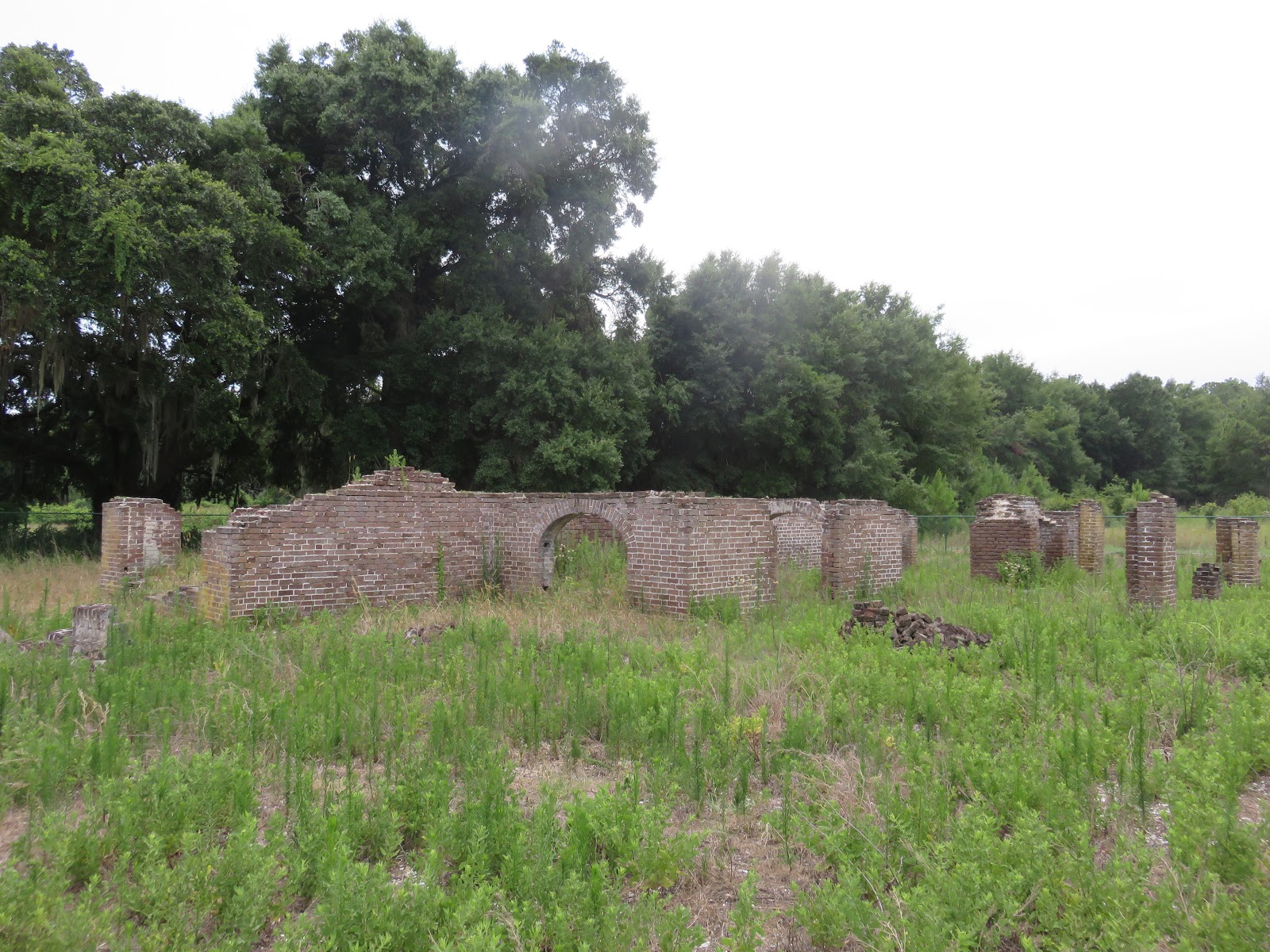

Like all Southern plantations, legends abound. One involves a "bee hive well" called Jacob's well--a well surrounded by a wall of tabby with a steeple-shaped roof and the name "Jacobus Fecit" cut into one of its sides. In its early days, it was rumored to be a place where lovers secretly rendezvoused. It is believed a little gray man stands guard over the well to keep its waters pure and only allows the "pure in heart" drink from it.


Another story involves the plantation cemetery located at the fork in the road where you turn right to go to Bleak Hall or left to go to Sea Cloud--another plantation located nearby. After leaving a clearing, you enter a narrow road surrounded by dense undergrowth and trees. Here you will feel the first wave of hot air hit the back of your neck, then again and again until you leave the area. The slaves believed this hot air to be the "Hags breath" and if you linger, she will cast a terrible spell that could even cause your death.

A third legend speaks of a Portuguese man wearing large gold earrings and a red bandanna fashioned into a turban who roams the shores of Botany Bay. Seven of his victims were discovered on the beach--all of them standing straight up in the sand.


And then, there is the Mystery Tree. It is located at the entrance of the road that led to Bleak Hall and Sea Cloud Plantations. Those who have seen it are amused by the oddities that decorate its branches, which mysteriously change from time to time. Some have suggested it to be an object known to the Gullah culture as the bottle tree. In the African culture, bottle trees are placed in a spot where evil is known to have dwelt. The tradition purports evil crawls into the bottles to destroy the beauty it reflects, becomes trapped, and is destroyed by the illumination of the rising sun. It is true the Botany Bay plantations owned slaves during their Antebellum period to work their sea island cotton fields. As to the Mystery Tree, I have not seen bottles on it to suggest this belief. 

Today, Bleak Hall and Sea Cloud have been combined to form the Botany Bay Plantation--a wildlife preserve consisting of 3,373 acres. Formed in the 1930's by Dr. James Greenway, it got its name from the barrier island that was near, but not a part of the Bleak Hall property--Botany Bay Island. Some of the island's previous names were Tucker Island, Watch Island and Clark's Bay. The last owners, John and Margaret Meyer, deeded the property to the state.


Botany Bay Island was much larger in the early days of Bleak Hall Plantation--covered with an impenetrable tropical jungle of wild oaks, palmettos, and cedars just twenty yards from the shoreline. Over the years, the ocean has encroached on the land. Now, only a narrow, pristine strip of beach two miles long and lined with a sun-bleached bone yard of weatherworn dead timber remains--loved by photographers. It was separated from the large plantation by an inlet and a smaller island named "Porky," a shortened name from "Pour-quoi." While crossing the marsh to the beach, you will pass an outcropping of trees and plants called Hammock Island. The beach was significantly eroded by Hurricane Matthew and was closed for awhile, but has since opened.

Botany Bay Plantation is a magical place with a secluded beach unsurpassed on the Atlantic coast and located on Edisto Island not far from Edisto Beach. In fact, from Botany Bay's shell-covered beach you can see Edisto Beach to the right and Seabrook Island to the left.


You can take a tour of Botany Bay Plantation featuring 15 points of interest by car. Keep an eye out for the Portuguese man and do not linger near the cemetery if you feel a waft of hot air on the back of your neck.

Saturday, February 8, 2014

A Magical, Mystical Place With An Unsurpassed Beach And Southern Plantation Legends

Bleak Hall, Sea Cloud and Botany Island are names that stir ones imagination. They bring to ones mind images of foreboding estates surrounded by half-dead, moss covered, aging trees wrapped in a perpetual state of gloom, portraits of salty, blue waters and wooden tall ships and pictures of far-away, palm tree-laden inlets on secluded islands visited by treasure hunting pirates. Apocryphal and fanciful places you would expect to read about in stories and poems written by the likes of Emily Bronte, Edgar Allan Poe, Robert Louis Stevenson, and James A. Michener. In some respects, these are very real descriptions of a place on an Atlantic coastal island not far from where you live called Botany Bay Plantation.

Botany Bay Plantation is a wildlife preserve on Edisto Island consisting of 3,363-acres under the
management of SC Department of Natural Resources. Formed in the 1930's when Dr. James Greenway combined the two previous plantations originally owned by the Townsend family, Bleak Hall and Sea Cloud, it got its name from the barrier island that was near, but not a part of the Bleak Hall property--Botany Bay Island. Some of the island's previous names were Tucker Island, Watch Island and Clark's Bay. The last owners, John and Margaret Meyer, deeded the property to the state.

Botany Bay Island was much larger in the early days of Bleak Hall Plantation--covered with an impenetrable tropical jungle of wild oaks, palmettos, and cedars just twenty yards from the shoreline. Over the years, the ocean has encroached on the land. Now, only a narrow, pristine strip of beach two miles long and lined with a sun-bleached boneyard of weatherworn dead timber remains--loved by photographers. It was separated from the large plantation by an inlet and a smaller island named "Porky," a shortened name from "Pour-quoi." While crossing the marsh to the beach, you will pass an outcropping of trees and plants called Hammock Island.


So-called Bleak Hall because of its proximity to the gales of the Atlantic, just a mile away, its name was also inspired by the title of a book written by Charles Dickens, "Bleak House."--John Townsend was an admirer of Dickens. The original great mansion of Bleak Hall was two-and-a-half stories high on a raised basement. A distinguishing feature of the mansion, a cupola, was later added after the house was built so the homesick bride of one of the Townsends could look across the river to her former home on Wadmalaw Island. It towered over the surrounding oriental gardens and the now famous ice house, which still exists and is an outstanding example of Gothic revival architecture. The road into the plantations came to a fork where a turn to the right went to Bleak Hall and the one to the left went to Sea Cloud--sometimes called "Seabrook's Folly."

At the outset of the Civil War in 1861, by orders from the Confederate government, the steamboat "Beauregard" evacuated everyone from Edisto Island and the plantations. Both Confederate and Union troops used the cupola on Bleak Hall as a lookout. At the wars end, the plantations laid devastated. The valuable silver, china, and furniture that was left behind by the Townsends were carried away or destroyed by Freedmen and the Federals. When the Townsends returned in 1866, the house was occupied by former slaves. Shortly thereafter, it burned down. A new one was built in its place, but later torn down and a modern house was built nearby. Neither houses of Bleak Hall and Sea Cloud remain.

Like all Southern plantations legends abound. One involves a "bee hive well" called Jacob's well--a well surrounded by a wall of tabby with a steeple-shaped roof and the name "Jacobus Fecit" cut into one of its sides. In its early days, it was rumored to be a place where lovers secretly rendezvoused. It is believed a little gray man stands guard over the well to keep its waters pure and only allow the "pure in heart" drink from it.

Another story involves the plantation cemetery located at the fork in the road where you turn right to go to Bleak Hall or left to go to Sea Cloud. After leaving a clearing, you enter a narrow road surrounded by dense undergrowth and trees. Here you will feel the first wave of hot air hit the back of your neck, then again and again until you leave the area. The slaves believed this hot air to be the "Hags breath" and if you linger, she will cast a terrible spell that could even cause your death.

A third legend speaks of a Portuguese man wearing large gold earrings and a red bandanna fashioned into a turban who roams the shores of Botany Bay. Seven of his victims were discovered on the beach--all of them standing straight up in the sand.

Botany Bay Plantation is a magical place with a secluded beach unsurpassed on the Atlantic coast and located on Edisto Island not far from Edisto Beach. In fact, from Botany Bay's shell-covered beach you can see Edisto Beach to the right and Seabrook Island to the left. You can take a tour of the plantation featuring 15 points of interest by car. Keep an eye out for the Portuguese man and do not linger near the cemetery if you feel a waft of hot air on the back of your neck--Botany Bay Ecotours. Location: Botany Bay Rd., Edisto Island, SC--Map


Wednesday, June 19, 2013

Botany Bay Plantation Personifies The Reasons Why I Love Charleston And The Lowcountry-A Must-see

A 4,687 acre wildlife preserve tucked away on the mossy oak draped roads among the marshy tidal creeks of Edisto Island is a pristine step away from civilization. Even its name summons an air of resplendence, as do the two plantations that were combined to make it, Bleak Hall and Sea Cloud. However, having been established after the Civil War, it is not officially a plantation. But that is of little import when compared to the beauty and splendor of Botany Bay Plantation.

The original homes of Bleak Hall and Sea Cloud Plantations are but a whisper of the glory days of Edisto Island's Golden Age. The sea island cotton raised on these plantations was famous for its high quality and highly prized throughout Europe. It all ended when they become occupied by Northern troops during the Civil War and were devastated at its end. Bleak Hall was burned in a fire and barely traceable ruins are what's left of Sea Cloud. What remained after was finished off by the boll weevil. That's Botany Bay's history in a sea shell. If you want the full historical details visit Edisto Island Museum.

This would be my first visit to Botany Bay. I have seen photographs and read articles, which only heightened my desire for a visit even more. I have been to Edisto Beach in previous years, driven past what has become known as the mystery tree, but had no idea the entrance to Botany Bay was right there. That realization came to me when we turned off of Highway 174.


The drive on Botany Bay Rd was magical. A dense canopy of old oak trees covered the dirt road. We passed cultivated fields of sunflowers and corn before arriving at a kiosk manned by an older gentleman who requested me to sign in and gave me printed material. It was a guide for taking a driving tour of the preserve with 15 marked locations of interest and an explanation of their significance. I am a beach person, so my focus was on the two miles of unspoiled shoreline accessible only by foot. From the kiosk, it was another two mile drive to the beach parking area where a sign reminded patrons of what was prohibited on the beach-notably shell collection.
 
 
From the parking area, it would be a 1/2 mile walk through a sprawling salt marsh to the beach. It was high tide, so the creeks and marshes were filled with the salty waters from the ocean. At the halfway point of the narrow path, we came to a patch of treed land called Hammock Island, but no hammocks did I see nor should I have expected to. Islands located landward of barrier islands are called hammocks and are typically inhabited only by plants and animals. South Carolina has 3,500 such islands. Always something new to learn.

We continued down the marsh path toward a thick line of trees common to the barrier islands that opened up onto Botany Bay's beach. The resulting view was everything I had envisioned and more. Weatherworn palmetto trees grayed by the salty sea breezes and age lined the sea shelled beach. As we walked, looking for the ideal spot to plant our chairs, we soon became aware of a custom peculiar to the beach. Visitors indulge in a practice of lining the trunks of downed trees with sea shells and hanging them on their branches. I saluted this custom by honoring it with a gesture of my own. I hung a couple of hand-picked shells on my ears while we sat.


We let the whole experience wash over us like the waves rolling onto the beach. I stepped into the warming surf for a swim, but walking into the waters was precarious due to the numerous sharp shells. Some people came to fish, some came to look at the shells, some came to photograph and some laid out blankets under beach umbrellas. I came because Botany Bay Plantation personifies the reasons why I love Charleston and the Lowcountry. It was idyllic.


We later drove into Edisto Beach and had lunch at the Seacow Eatery located at 145 Jungle Road. Nothing fancy, just a typical beach restaurant with the smell of beer batter soaked fish and french fries. It had decent prices and hospitable service. We sat on the beach near the Pavilion Restaurant and took more memorable pictures. Enjoy the photographs. They tell the whole incredible story. Botany Bay Plantation and beach is a must-see.