Showing posts with label visit Summerville. Show all posts

Monday, July 20, 2026

A Step Back to the Tranquil Halcyon Inn--An Enduring Icon of Summerville's Prosperous Golden Age

Halcyon isn’t a word you hear every day. Unless you happen to be of Greek descent or have spent time studying mythology, it’s likely unfamiliar—except, perhaps, to a few longtime residents of Summerville and the observant souls who’ve glimpsed it from their car windows while driving down South Main Street.

To those older Summervillians, Halcyon stirs a memory. It was once the name of one of the grand resort inns that graced the town during its most prosperous era—the Golden Age. And if you’ve ever traveled Highway 17-A on your way to work or errands, you’ve probably passed the once-upon-a-time inn without realizing the history that lies just beyond its tall trees, black iron gates, and white columns.

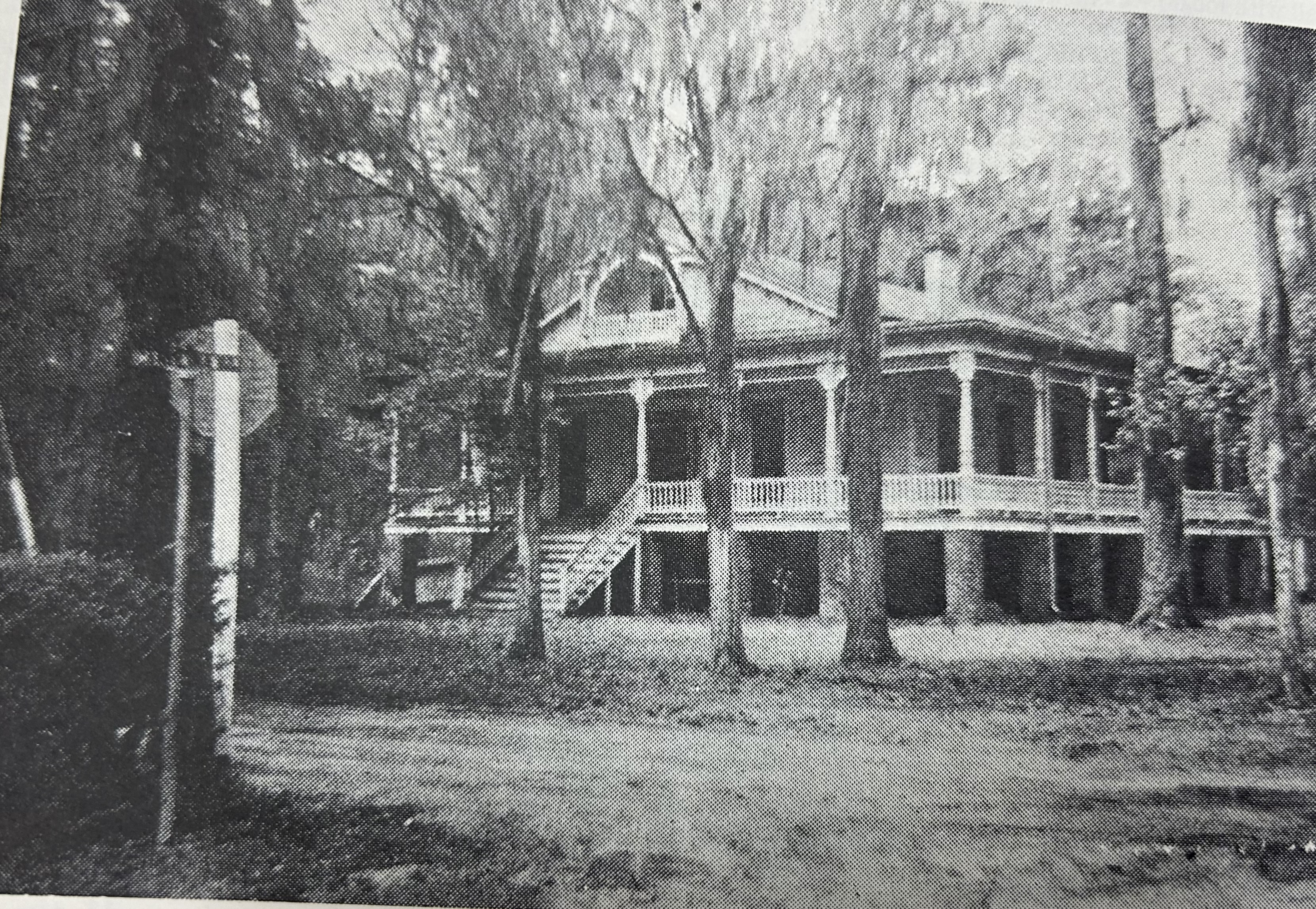
No one knows exactly when the house was built. The Colleton County records—its original county—were lost when Sherman’s troops burned Columbia in 1865. The earliest surviving reference suggests the house rose sometime between 1830 and 1840, known then as Duke’s House, after its first owner, John R. Duke. It was a classic Southern home, with a broad two-story porch stretching fifty feet across and twelve feet deep, its columns greeting visitors with quiet grandeur. On that porch sat a joggling board—a piece of Charleston tradition—added by one owner who said it “completed the porch.”

Inside, the first floor opened into a thirty-three-by-twenty-foot living room with thirteen-foot ceilings, a generous dining room, two dens, and a bedroom. Upstairs were four bedrooms and a hall, along with one curious feature—a door that led to nowhere. No stairs, no landing, just empty space. Mrs. Dion, one of its owners, liked to call it “the door for invisible inhabitants.”

A 1909 plat shows Halcyon once covered eight acres, including a pear orchard. Scattered across the grounds were outbuildings, service quarters, and a gazebo. When the Weeds owned the property, they transformed these structures into guest cottages for their resort inn. One was called Magruder’s House, named for a man who had lived there as a slave until the 1930s. Another, the Pink Cottage, had once been a stable—its barn doors still intact. The octagonal gazebo, set beside a bricked-in spring, became a beloved landmark.

Unlike the Pine Forest Inn or the Carolina Inn, Halcyon wasn’t known for celebrity guests. Its fame came instead from its hospitality. Mrs. Caroline Parameter, daughter of Mrs. Weed, was celebrated for her menus—she once ran the Tea Room at Middleton Place. To Northern visitors escaping harsh winters, Halcyon was a sanctuary of calm, a place where the air was soft and the days unhurried. Many stayed from late October through April, savoring the quiet rhythm of Summerville life.

It was the autumn of 1909. The air in Summerville carried that familiar mix of pine and cool promise. A Northern visitor named Mr. Edwin Harrow stepped down from the carriage that had brought him from the train depot. He paused at the gate of Halcyon Place, taking in the sweep of the grounds—the old oaks draped in moss, the pear trees still clinging to their last fruit, and the white columns rising like quiet sentinels against the afternoon light.

He had heard of Summerville’s inns, of course. Travelers spoke of the Pine Forest Inn with its grand halls and bustling winter crowd. But it was Halcyon Place that had been recommended to him by a friend who said, “If you want peace, go there. It’s where the world slows down.” Edwin felt that truth the moment he stepped through the black iron gates.

Mrs. Weed herself greeted him on the porch; her apron dusted with flour from the afternoon’s baking. She had a way of making guests feel as though she had been expecting them for years. “You must be Mr. Harrow,” she said, offering a smile that softened the long journey behind him. “We’ve put you in the Pink Cottage. It’s quiet there. The garden keeps good company.”

As she led him along the path, Edwin noticed the outbuildings—some old, some lovingly restored—each with its own story tucked beneath the shingles. The Pink Cottage still had its barn doors, a reminder of its former life. He ran his hand along the wood, feeling the grooves worn by decades of use.

Inside, the room was simple but welcoming: a quilt folded neatly at the foot of the bed, a pitcher of cool water on the washstand, and a small vase of pear blossoms that must have been gathered that morning. Through the open window drifted the sound of the spring near the gazebo, its gentle trickle blending with the rustle of leaves.

That evening, Edwin joined the other guests for supper. Mrs. Caroline Parameter had prepared a meal that tasted like comfort itself—roasted chicken, warm bread, and a pear tart that made him close his eyes for a moment just to savor it. Conversation was easy, unhurried, as though everyone had silently agreed to leave the outside world at the gate.

Later, as he walked back to the Pink Cottage, lantern in hand, Edwin paused to look at the main house. The windows glowed softly, and the porch seemed to breathe with the warmth of the day’s last light. He felt something settle in him then—a quietness he hadn’t known he needed.

He would stay through April, returning home with stories of moss-draped oaks, gentle evenings, and a place where time moved differently. And for the rest of his life, whenever he smelled pear blossoms or heard the soft creak of old wood, he thought of Halcyon Inn—its kindness, its calm, and the way it welcomed him as though he had always belonged there.

Today, the once-upon-a-time Halcyon Inn still rests beneath its ancient oaks, serene and dignified behind its black gates. Its name, drawn from myth and memory, feels perfectly chosen—a reminder of Summerville’s own “halcyon days,” when life moved at a gentler pace and beauty was measured in shade and stillness.

Visit Summerville

Wednesday, August 13, 2025

Somewhere in Time--A Stay at Summerville's Pine Forest Inn

Shrouded in a final blast of steam, the Summerville Short eased into the station—a small, elaborately decorated Victorian-style structure. Stepping onto the depot platform, I glanced at my pocket watch. The bright Lowcountry sun reflected off its glassy face. It was 2:05 p.m. 

"Right on time," I whispered.

A plume of black smoke billowed from the locomotive's smokebox and was quickly whisked away by the warm, early afternoon breeze.

Horse-drawn carriages awaited arriving passengers. I surveyed the depot area for my reserved transportation and spotted a group of coachmen. One among them held up a piece of paper with my name on it. I approached the smartly dressed gentleman and identified myself.

"Good afternoon, sir. Welcome to Summerville," he said.

His words were tainted with a quaint accent, quite different from what I was used to back in Ohio. He handed me a newspaper dated April 9, 1902. I stepped aboard the carriage. With a gentle tug on the reins by my experienced driver, the carriage eased forward.

The downtown district was crowded with people. Rumors that President Roosevelt and his entourage were in the Summerville area abounded—a bit of information I had overheard while on the train.

To the left of our advancing carriage was a fenced-in square, landscaped with rows of live oaks and a diamond-shaped walkway where children were at play.

On the opposite side of the square stood a row of wooden buildings, dominated by a nearly completed triple-arched façade bearing the designation Arcade Theater. To our right, a few gentlemen standing in front of a pharmacy hospitably tipped their hats as we passed.

Turning the corner at an intersection, I asked, "What is the name of this road?"

The coachman replied, "Main Street."

I followed with an additional question. "The tall building on the right with the bell tower—what purpose does it serve?"

"Town Hall, sir."

Leaving the town square behind, we passed a white directional sign covered with wooden pointers bearing the names of various inns and hotels located throughout Old Summerville. Then came several large homes bordered by white picket fences, each richly adorned with a profusion of magenta-colored flowers noticeably common to the area.

We entered a thick stand of tall pines intermingled with aged, moss-covered live oaks. Clusters of wisteria dangled freely from some of the branches. I inhaled a full breath of air—it was distinctly laced with the refreshing scent of pine.

Winding through the shaded canopy, it wasn't long before we came upon a broad, brick-paved drive flanked by huge white urns containing plantings of the same flowers growing throughout the town. We passed under a columned gateway surrounded by beautiful gardens—more wisteria and azaleas.

At the end of the driveway, rising four stories high into the needled branches of the tall pines, was the castellated center rotunda of the Pine Forest Inn—my accommodation for the next couple of days.

My carriage pulled up to the Inn's steps. Five horse riders sauntered past. I stepped off, paid the gentleman, and ascended the flight of stairs.

The front piazza was impressive. Wider in the middle, it extended out on each side of the rotunda the full length of the building and ended in a hexagonal shape at the corners. Patrons were scattered about the piazza on chairs, enjoying the southern exposure and their afternoon tea—likely made from tea leaves grown locally at the renowned Pinehurst Tea Plantation of Dr. Charles Shepard. I had read about it in a magazine on the train. A tour of the Pinehurst Tea Garden was scheduled for tomorrow.

Upon entering the impressive building, two smiling ladies curtsied as I passed. I acknowledged their genteel gesture with a smile and a tip of my hat.

The front entrance hall ran the full length of the rotunda. It was majestic. Arched walls set upon pillars divided the rotunda foyer from other sections. A grand staircase led to the upper floors, where thick wooden handrails wrapped around the open galleries. As I walked it, I estimated it to be forty-seven feet from front to back.

Large, oak-mantled fireplaces with marble hearths and exotic plants were placed strategically throughout the spacious lobby. Rocking chairs were scattered about. At the rear entrance, another long piazza served a huge three-sided courtyard.

I checked in at the desk. A double-chinned, spectacle-wearing hotel clerk greeted me with a smile and a Southern, “Good afternoon.” I informed him of my two-day reservation. After signing the necessary papers, he rattled off some of the amenities.

“There is an Amusement Hall with a bowling alley and billiard tables, two lawn tennis courts, croquet grounds, an 18-hole golf course, a swimming pool, and a livery with sixty horses.”

I touched the brim of my hat and nodded. “Thank you.”

“You’re welcome, sir,” he replied, then added, “Would you like some help with your bag, sir?”

I declined the offer. He then directed my attention to a tray at the end of the counter holding crystal glasses and a matching pitcher filled with an iced, amber-colored mixture.

“Help yourself to a glass of freshly brewed Summerville sweet tea, sir.”

I poured a glass and took a sip. “Interestingly tasty,” I corroborated.

I turned and boarded the electric elevator that serviced the three upper floors—each with its own lobby and its share of the 150 suites and singles. As we slowly ascended, I engaged the elevator operator in some small talk. He willingly and gladly complied, offering a few quick tips about Summerville.

I was assigned a single on the second floor at five dollars a night.

I entered the room. Large windows bathed the interior in warm sunlight and provided an excellent view of the grounds below. Steam  radiators lined the exterior walls. A painting of Drayton Hall hung above an elaborately carved mantle.

I placed my suitcase next to the open fireplace and set the empty crystal glass on a marble-topped table beside the room’s large cherry poster bed. The comfortably appointed room also included a private bath and an electric bell connected to the general office for personal service.

I emptied my suitcase and freshened up a bit before setting out to further familiarize myself with the Inn’s appointments.

After another short ride on the elevator, I returned to the main lobby. I curiously peeked into the adjacent dining room. Paneled in Southern curly pine, the complementary woodwork was elegant. Divided into three sections by wooden arches and comfortably filled with beautiful table settings, it seated 250 people. An American flag hung from the chandeliered ceiling.

It was near 3:35 p.m., according to a nearby grandfather clock. The brunch crowd had already dispersed to other suitable areas. The dining room staff was busy making preparations for the evening meal.

Other common rooms included a large main-floor parlor; ladies’ private parlors with toilet rooms; reception rooms; a library; reading room; sun parlor with exotic plants; wine and smoking rooms; and a Rocking Chair Room. Similar to the dining room, all were paneled with Southern curly pine.

Women sitting in the sun parlor engaged in chit-chat centered around their families and social events. Some rocked baby carriages with their feet while doing needlework. They all wore fancy hats and long, lacy dresses—the ankle reveal was socially frowned upon.

Gathered in the wine and smoking room, men in suits debated the latest news and talked about their golf game.

The Rocking Chair Room fascinated me the most. I could never resist the invitation of a rocking chair. I would venture to say there were about a hundred chairs—thirty, by my estimation, presently occupied. It was the right occasion for some self-indulgence. The seconds quietly ticked away with each back-and-forth motion. The seconds ticked into minutes. I pulled out my pocket watch. It was 4:45 p.m.

My restful thoughts turned to dinner. I contemplated the pleasure of indulging in the highly acclaimed, blue-ribbon cuisine the Inn was famous for. The first-class chefs were advertised as preparing their culinary delights with ingredients gathered from local gardens, along with meat and seafood delivered fresh by train from Charleston and New York markets.

After dinner, perhaps I would share a glass of wine with Florence Nightingale Graham in the wine room, shoot some billiards with Dr. Shepard, or discuss literature with Edna St. Vincent Millay in the library. Tomorrow, attend a fox hunt on Ingleside with Teddy Roosevelt.

After all, this was the illustrious Pine Forest Inn of Summerville—where the imagination had no boundaries.

Visit Summerville SC | AT THE HEART OF IT ALL

Saturday, September 21, 2024

A Bit of Bar Crawl History to Sip on During Summerville’s “Hold My Tea Bar Crawl”

Frothy Beard Off World
Why is it called a “bar crawl”? It sounds like people are moving from bar to bar on their hands and knees—an outrageous thought but not necessarily inconceivable. The same could be said about the term “bar hoping”. You are not literally hoping from bar to bar. The answer is quite simply, it is one of those nonsensical idioms we use to describe a night out patronizing local drinking holes whether planned or not.

Ironically, in this case, there is a sobering truth in this idiom. It is possible that crawling from bar to bar could happen if a person drank too much at one bar and found walking to the next to be a bit challenging, an embarrassing picture for the person, but since when are the intoxicated rational. Upon investigation, it turns out the term originated in the United Kingdom in 1645 or was it the 19th century? Leave it to the pub-loving Brits to come up with this thought provoking expression.

As one story tells, a group of hooligans led by Sir Geoffrey Toppenbottom decided to go out drinking one night and hit the local taverns. When it came to drinking ale, they were a hardy group of heavy-weights and drank the local tavern dry. Three villages and four taverns later, Sir Toppenbottom and his drinking mates forgot where they left their horses and managed to crawl their way home. From the experience, they coined the term “pub crawl”. After a few tall ones, you just might find this tall tale easier to swallow.

For a more believable story, we go to the Oxford English Dictionary. The 19th century was when British towns and cities exploded in size. As the towns grew, so did the number of public drinking houses, many in close proximity to one another. For a single night of fun and socializing with friends, patrons moved from pub to pub at a slow and steady pace as opposed to rushing. Thus, the term “crawl” became the descriptive for the event.

Five Flowers

Amaret-Tea
I am glad to report I did not see anyone crawling from drinking establishment to drinking establishment in Summerville for the Sweet Tea Festival’s “Hold My Tea Bar Crawl”, but I did observe local residents and visitors having a good time socializing and evaluating the bar’s cocktail entry so as to vote for their favorite. The winning bartender will receive the People’s Choice recognition after the conclusion of the event on Sunday.

There was one question I put to the competing bartenders as I went from bar to bar. By observation, and this is just my opinion, women tend to socialize and engage in local events in groups more than men, unless it has to do with a sporting event. I asked them, “Have there been more women participating in the bar crawl than men or visa versa?” The overwhelming consensus was, “It has been about even.” It was great to hear the bar crawl was being so well supported.

Sweet Tea Mojito

Bubbly Bee Tea

Flowertown Mojito
Summerville’s competing bars and restaurants are Hilton Garden Inn—Sweet Tea Mojito—Ashlee Circelli, Five Loaves Cafe—Flowertown Mojito—Kacie Bankers, The Azalea Bar and Garden—Five Flowers—Elizabeth Cureton, Frothy Beard Off World—InfiniTEA—Brennen Walters, Sweetwater One Twenty Three—Amaret-Tea—Chelsea Cronk, The IceHouse—Bubbly Bee Tea—Jeana Masula, and Godwin’s Beer Hall—Shepard’s Shandy—Austin Willard. All of the cocktails have been very good, and picture perfect. It will be a difficult decision in choosing my favorite, and my vote is just one. Summerville will decide.
Shepard’s Shandy

The “Hold My Tea Bar Crawl” has become a regular part of Sweet Tea Festival Week. It has been fun enjoying a quality cocktail made by local, talented bartenders and socializing with friends and making new acquaintances. Be sure to take it slow and easy and savor the moment, that is what it is all about. Added to that, you are supporting Summerville’s local businesses, and don’t forget the t-shirt you get after you succeed in filling out your bingo card.

Visit Summerville

Saturday, September 14, 2024

Sweet Tea Festival Week and Hold My Tea Bar Crawl—Time to Get a New T-shirt

My “Hold My Tea Bar Crawl” t- shirt has gotten faded and worn since acquiring it last year, so it is time to get a new one. Sweet Tea Festival Week is near at hand. The bar crawl begins Monday the 16th and runs to Sunday the 22nd. The participating establishments have concocted their finest sweet tea cocktails and are ready for you to determine the best of the best, based upon your personal preferences and likes.

Summerville’s competing bars and restaurants are Hilton Garden Inn—Sweet Tea Mojito, Five Loaves Cafe—Flowertown Mojito, The Azalea Bar and Garden—Five Flowers, Frothy Beard Off World—InfiniTEA, Sweetwater One Twenty Three—Amaret-Tea, The IceHouse—Bubbly Bee Tea|, and Godwin’s Beer Hall—Shepard’s Shandy. Want to know each bartenders chosen mixtures, recipes are posted on social media and Visit Summerville web sight. You can download bingo cards off of Visit Summerville or at participating establishments.

As you savor the cocktails, ask your bartender or server to mark off your card with their initial. Mark 7 spaces in a row or diagonally during the week of the crawl. When you have decided on your favorite, cast your vote using the QR code on your Bingo card. Your vote will help decide the winner of the People's Choice Award, and you will get the middle square.

Trade in your completed card for a free bar crawl shirt at the Summerville Visitor Center or Cotton-Tea booth at the Sweet Tea Festival while supplies last.

Aside from winning you over, bartenders are also competing to win a Critic's Choice Award for their cocktails. Three judges, comprising mixologists and/or industry professionals, local people of interest, and culinary content creators have been appointed to evaluate the entries, considering factors such as taste, presentation, and originality. The real challenge of the competing mixologists in my estimation is not just to win your admiration and vote but to maintain the picture perfect cocktail as seen in the photo through the whole week.

A preview—Bubbly Bee Tea
Last year’s winner of the Critics Choice Award in the Sweet Tea Cocktail Contest was Azalea Bar and Garden’s “Porch Rocker” by Elizabeth Cureton. In the People’s Choice category, Lavender TEAse” by Laura Walling at Sweetwater One Twenty Three was the community’s favorite.

Join me for the fun. Send me a message where you plan on being and I will join you. I look forward to meeting you during the week. We will clang glasses and share Summerville stories, like the Summerville Light or The Phantom Flight Over Summerville. See you then.

As a reminder, be sure to attend the Southern Songwriter Festival Thursday, Sept 19 – Saturday, Sept 21. Over 40 different songwriters will perform at various venues throughout Historic Downtown Summerville. Featured stages, Songwriters Alley on Short Central and Headliner performance at Public Works Art Center with full set bands on Sweet Tea Festival day on Hutchinson Square Stage. Forty Mile Detour takes the stage at 2 pm.

If that is not enough, Summerville’s Historic Garden Stroll will take place September 21st at 9:30 am to 12:00 pm. It will begin with a sneak peek of the Azalea Park Children’s Discovery Garden to be completed in late Fall 2024. It will feature a variety of nature, music, and art-inspired pieces geared towards children. After, four nearby historic homes will open their beautiful private gardens to be toured by ticket holders. Live music, refreshments, and small bites will be available. Proceeds will benefit Leadership Dorchester Class of 2024 and garden project—$75. 

Summerville’s Sweet Tea Festival Week will be jam-packed with things to do. Hop on the Summerville festival wave and hang ten—slow and easy to savor the ride through the events. Cheers.

Thursday, May 2, 2024

Roll the Dice, Make a bet, It is One of Summerville's Distinctive Properties

It is a bit on the difficult side to believe quiet, peaceful, charming Summerville had a "red-light district" in its past. Back in the day, the eatery now known as the Montreux Bar and Grill was a boardinghouse and restaurant operated by a person by the name of Miss Lucia. It was said to have been part of "the red-light district." This would seem to be an apparent contradiction of order, especially when you consider during the time Confederate troops were stationed in the town, they were jailed for bad conduct towards resident females, and rightly so. Different times. Different decades.

On top of houses of ill repute, it also had a gambling casino that was associated with the illustrious Pine Forest Inn--something that would be considered illegal in South Carolina today. Unlike many other states, the state of South Carolina is by far the strictest state when it comes to gambling with no casinos in its major cities. The only legal gambling is on a casino cruise. There is one in Little River called The Big "M" Casino.

Summerville's once upon a time Pine Forest Inn casino was located at 100 Marion Avenue. It is difficult to find any substantial information about the casino itself, but there is great deal of detail available about the house it was located in, and its history is fascinating.

It is believed by residents to have been built somewhere between 1890 and 1900 by Thomas Hopkins and referred to as "Hopkins Villa." The Summerville Scene in April of 1975 called it "the cut-down house." The reason being the original house was built on columns five and a half feet off the ground. When Ralph Sullivan purchased it from Urban M. Kennedy in 1951, he lowered it to the height the present house is at, but he also did something else that would be considered a stunning feat. He moved the complete house from its original location, which was closer to the road, without disturbing the structure, interior, chimneys, and porches. On top of that, he turned it so the main entrance faced Marion Avenue, where it is today. That was some about face. However that was not the only about face it made.

Somewhere between its construction and the 1930's was its gambling days with the Pine Forest Inn. Hopkins left the property to a religious group called the Order of Sisters of Our Lady of Mercy in 1904, who lived there for a number of years but left the property and returned again in the 1930s. Whether it was a casino during that period of time or while Hopkins owned it before he left it to the religious group is a question to be answered with further research. Regardless, that was some about face from vices to virtue.


Today, 100 Marion Avenue is surrounded by white fences and tall bushes. You can get a tempting peek at its main, front entrance through a small gated-opening at the middle of the property. It is a distinctive estate with an arching driveway and expansive porches. It is a fascinating part of Summerville's grand history. Roll the dice, make a bet, it is a history that included what would be considered illegal today.

Visit Summerville

Summerville Dream

Thursday, March 14, 2024

Summerville Keeps on Rising Like a Phoenix from the Ashes in the Face of Adversity

Summerville, from the time of its conception, has been a place to where Lowcountry residents came to heal and renew. Charleston planters, who perspired in the heat and humidity of their river plantations, marooned themselves there to prevail upon its "remarkably dry and balmy atmosphere." Charlestonians, laboring against the voracious mosquitos and yellow fever of their peninsula estates, traversed the 25 miles to avail upon its "foliage of trees and luxuriant undergrowth" that "shut in any poisonous exhalations that might otherwise arise." Unequivocally, Summerville has been appraised as a "charming, rural, picturesque town with a health-promoting atmosphere."

However, Summerville's journey from "Let The Pines Be Sacred" to "The Birthplace of Sweet Tea" has had its ups and downs. In the beginning, the inviting sandy plateau was dotted with Mosquito houses with roving cattle cutting paths through the many pine trees. Then, the railroad came to town and made Summerville one of its stops and held out the promise of greater things to come, but the pineland village grew slowly in population and accommodations.

Then, in 1860, the inhabitants came under the influence of a "new sprit." The sluggish apathy of the previous years seemed to disappear. An "enthusiasm for progress" pervaded the sleepy community. A new administration was taking charge. The new mayor, Reverend Limehouse, purchased land on the Great Thoroughfare and had a new town hall built with a jail behind it and adjacent was the town market. The Brown's Hotel was open for business with a new ten-pin alley and billiard room along with $.50 tickets to Charleston and back, including carriage ride. The Vose Inn and Mr. Cooper's Paradise were other attractors.

However, a political hurricane was brewing in the social atmosphere and its black, ominous clouds spilled over the Town in a fury. It was now 1861. In the distance, shells rained down on Fort Sumter and the American Civil war was under way. Southern State troops were ordered to rendezvous on the South Carolina Railroad at Camp Woodward in Summerville. It would be a chaotic time with the arrival of the emotionally charged troops.

About the gathering combatants, Major Thomas W. Woodward wrote in his memoirs, "And—folly of follies—you were to be allowed to choose whether you would go as a Regiment or disband and go home, although you had already agreed to offer your services to the Confederacy." He further lamented, "some companies preserved their discipline, others were really but roving mobs of jolly, rollicking soldiers."

Eventually, the uniforms changed from grey to blue. There was a threat the Federals who captured Charleston were going to burn the town. In May of 1865, the Black Union Provisional Brigade moved from their position at Bacon's Bridge to occupy Summerville. With many houses and buildings turned into hospitals, it became the temporary residents for the sickly and wounded.

While recovering from the Civil War, the final years of the 19th century saw two more devastating local events. Summerville was rattled by an earthquake in 1886 and a downtown fire ravaged most of the buildings around the Town's square. As with all fires, the clouds of thick smoke dispersed and sunny, blue skies appeared overhead. The sacred tree's that soothed the first marooners came to the rescue.

The International Congress of Physicians in Paris declared Summerville one of the world's two best places for treating lung disorders. The town rose from the ashes and the pleasant aroma of azalea and wisteria wafted through the tall trees and winding streets. Grand inns and hotels were constructed to accommodate the influx of visitors. It was the "Golden Age of the Inns" and prosperity reigned supreme. But alas, the dubious crown of financial security was soon to be knocked off.


An Economic shakeup called the Great Depression began to change the landscape. The wrecking ball took out two of the Town's premier accommodations, the Pine Forest and Carolina Inn. The Summerville Short no longer stopped and the grand old railroad station disappeared from Hutchinson Square. The Summerville Show stopped the movie projectors from turning. Hurricane Hugo paid an unwelcoming visit and showed no respect for the cherished pines. The downtown area lost its allure.

Then, a call went out. :The show must go on," said the Flowertown Players, and Summerville had a Dream. Every Third Thursday the community would gather together and the shops were going local. The Town's popular magazine made a sweet discovery and the "Birthplace of Sweet Tea" took its honored place among the town's mottos, and now from Botany Bay to Boone Hall, it is "at the heart of it all." Restaurants and cafes are on nearly every corner and in-between inviting patrons to linger a little longer. It seems there is no stopping the Town from rising like a Phoenix from the ashes in the face of adversity, and a little help from providence.

Could there be another civil war, it is in the realm of possibility. Could another earthquake happen, it is a viable danger. Could there be another economic crisis, there is always that prospect. Could there be another Hurricane Hugo, blink your eyes and the weather does change. As heralded in this article, each of these insidious calamities have confronted the Town through its 177 years, and each time without reservation, it has prevailed. The only way Summerville could ever fail is if it would lose touch with its sense of itself. Who it was, who it is, who it needs to be, and who it must be in the ever changing South Carolina Lowcountry.

Visit Summerville        Coastal Coffee Roasters

Summerville Dream     La Rustica - on Magnolia

Flowertown Players      Laura Summerville

Azalea Magazine          Five Loaves Cafe

More Summerville stories.


Friday, November 10, 2023

Five Points in Summerville--A Once Upon a Time Relic Explained or Unexplained

Summerville is growing, and as a result, is changing. However, Summerville has not forgotten its past. Its past is interwoven into what it is becoming today, and what it will be in the future. It celebrates the stories that have already been written through its projects, murals, arts, statues, books, magazines, festivals, and tours. Rich, entertaining stories explained and unexplained. The following unusual story, though not as well known and significant as the Pine Forest Inn, or the Railroad Station, or White Gables, you just might find compelling.

In Summerville, there is an area where three roads converge unto South Main Street to make a single intersection of five points. The roads are W. Carolina Ave, E. Carolina Ave, and Tupper Lane. I have driven through this intersection many times. Once upon a time a strange, potted ornament occupied a space at the point where W. Carolina Ave and Tupper Lane come together.

It was always just a brief curiosity because I never made any real effort to find out what the strange looking tree-like structure with blue bottles stuck on its branches was. Only by accident, I stumbled upon the answer. I was researching ghost stories in the Summerville area. Not surprising, it's called a blue bottle tree and quite common throughout the South. Perhaps, you remember seeing it as you navigated this highly traveled crossroads. I say remember because like many notable Summerville landmarks, it is no longer there.

What purpose did it serve? Was it meant to be just a decorative object to amuse passersby? Did its presence have a darker, deeper meaning for the individual or individuals who placed it there? After all, the blue bottle tree bears a cultural significance to some Lowcountry residents of times past.

Today, the blue bottle tree is mainly nothing more than a decoration people put in their gardens and on their lawns, but in history, the blue bottle tree is steeped in superstitions brought here by African slaves, although I should add, superstition to some, to others, deep rooted beliefs.

The color blue was believed to ward off spirits, more specifically, the evil kind. The blue bottles on the bottle tree are thought to entice the evil spirits into climbing inside during the evening hours where they become trapped. Then, the morning sun comes up and the sunlight kills the spirits. Quite an ingenious idea, if you believe in such things. Also, a nifty way of making good use of empty wine bottles, if you like the idea of a blue bottle tree in your yard.

Summerville's Five Points has a history. According to one study, a dark history. It is a well-known high-accident intersection. Between the years of 2015 to 2017, there were 60 crashes. Nine resulted in 13 persons injured and 51 resulted in property damage. Fortunately, there were no fatalities. To be noted, these statistics only covered a three year period. I took the picture of the blue bottle tree in 2015. So, when that study was done, it was already there. Yet, could this be the reason the blue bottle tree was placed at this crossroads in the first place, or was there something else more insidious going on with the properties around Five Points. Just down the road are the lion-topped brick pillars of 1006 South Main Street where the ghost of Mary Margaret resides.

Proposed roundabout
There are plans in the making to address the traffic problem at Five Points. One of them involves constructing a two-lane roundabout, which would not include Tupper Lane--it would be turned into a cul-de-sac. Thus, Five Points will fade away into history like the blue bottle tree that once graced the area to become just another footnote in Summerville's illustrious history like the Summerville Light.

I know there is someone out there in Summerville who knows the true reason why the blue bottle tree was placed there, when it was placed there, and who removed it. If not, it will become one of Summerville's Unexplained.


More Summerville Stories


Wednesday, September 20, 2023

Montreux Bar and Grill Sweet Tea Cocktail Entry and a Bit of a Ghost Story

The drink pictured here is the offering by Montreux Bar and Grill for the Hold My Tea Bar Crawl Sweet Tea Cocktail Contest now under way and running to September 23. As a suggestion, when there for a visit during the Sweet Tea Festival all this week, keep an eye on your car keys. If Mischievous Monty thinks you had a bit too much to drink, he will steal your keys from you. And, if they should come up missing, don't take offense, he is doing it for your own good.

In case you didn't know, Mischievous Monty is the patron ghost story at the longtime local favorite Montreux Bar and Grill. The mischievous phantom is an unknown individual, who decided to make the building his permanent home. He has a mischievous reputation dating back many years.

The drink is called Lowcountry Royal-Tea by Leah Pippin. It is a recipe of 1.5 oz Nippitaty Gin, 5 oz Simple Syrup, 3 Lemon Slices, 4 Mint Leaves, and 3 oz Unsweet Tea.

The building was originally constructed circa 1862. It has housed generations of businesses during that time. It has even been said it was once part of Summerville's "red-light district." At that time, it was a boardinghouse and restaurant known as Miss Lucia's. Other businesses once located at this address include a dry goods store owned by Chalmers Waring (now that is a recognizable Summerville name), a store called Summerville Hardware belonging to Gene Hutson, a NAPA Auto Parts, and McGuire's Irish Pub.

When it was a NAPA Auto Parts store, on many occasions, it was said parts would be set aside for customers, and then when they would arrive to pick them up, the part would no longer be where it was placed. Employees claimed to hear footsteps where no one was walking. There would be sounds of things being dragged around in locations no one had access to.

When Montreux first opened, employees working in the grill section would clean the kitchen every night, only to return the next morning to find pots and pans moved around or rearranged. A bartender reported seeing a framed record album launching itself over glasses and bottles from the shelf it had been sitting on striking the bar and ricocheting back into the ice maker.

The general manager recounted one night while alone in the bar and locking up someone shouted in his ear. Another night, he witnessed a plastic caddy sitting on the bar taking off into the air on its own. Upon viewing the surveillance camera footage, he described what looked like a mist descended down onto the caddy in a rapid swooping motion and struck it.

Of course, these are all stories told by witnesses through the years who can offer no reasonable explanation for what they experienced in the building now called the Montreux Bar and Grill. Quite ironic, even the  bar's name is tied to the infamous "Smoke on the Water," a Deep Purple song commemorating the burning of the Montreux Casino on Lake Geneva in Switzerland.

Enjoy the festivities and Montreux's sweet tea cocktail entry for the sweetest week in Summerville, and just maybe, Mischievous Monty will pay a visit to your table or seat at the bar looking for your keys if you had a bit too much to drink, or gently whisper something into your ear, like, be a nice patron and leave a good tip, or else. Have fun and don't forget to cast your vote and get your free tee-shirt.


.127 W Richardson Ave., Summerville, SC

Scan code for more Summerville stories

You can read the full story about Monty in Bruce Orr's book Haunted Summerville, South Carolina.

Monday, October 10, 2022

La Rustica is Everything Italian--Opening Reception Showcased What It has to Offer Summerville in Great Food and Quality Service

Big things have small beginnings. This axiom is true of just about everything in life and in particular, business ventures. When I first met Giulio Pellegrini, he was standing by a miter saw. Initially, I thought he was one of the tradesmen renovating the old house at the corner of N Magnolia and E 3rd N Street with the star motifs on its porch columns. I introduced myself with a handshake and asked if I could have a look around. He was very accommodating and as we chatted, I soon learned he was the owner. However, he made one thing clear, if I wanted more information, I needed to talk to the real boss, his daughter, Aimee--Managing Director at Pellegrini Restaurant Inc. By that statement, I gathered this enterprise was a family operation.

Giulio was born in Italy, where he attended art school. In 1965, he came to America and began to work as a dishwasher in a restaurant in Flint, Michigan. He would soon get a job with General Motors. However, in time, he came to own the very same restaurant where he was the dishwasher. He met Janie during this period of time and the two of them were married. He sought to become a skilled chef and Janie honed her talents to become a masterful pastry baker.

The Pellegrinis moved across the country to Seattle, Washington in the 80s. They owned various restaurants in the interim. Then in 1996, they opened a restaurant located along the waterfront of West Seattle called La Rustica. Many of its reviews described it as a very quaint little place with a great atmosphere and fantastic food in large portions. As time passed, they would eventually seek to make a change of scenery. They set their sights on the east coast and the Lowcountry of South Carolina. 

The hospitable community of Summerville caught their attention. While searching for a restaurant to buy, Aimee came across an ad about one of the town's oldest eating establishments. It was Eva's on South Main Street. A photograph highlighting the restaurant's famous view of Hutchinson Square through its front window intrigued her, but the family's final decision took them in another direction, which led them to restore and renovate the old house with the distinctive star motifs on its porch columns. Now, after a long labor of love, the desired outcome has been finally achieved, and La Rustica had its Opening Reception Saturday October 8th, to be followed by three limited soft openings by reservations on Monday, Tuesday, and Wednesday. Summerville's residents and visitors who have been anxiously but patiently awaiting this highly anticipated event can now satisfy their hunger for some quality Italian cuisine courtesy the Pellegrinis and staff.

The Opening Reception succeeded at showing off the best La Rustica has to offer. The enterprise is all about family from the floor up, Summerville's family. The Pellegrinis personally welcomed each guest and made you feel at home. The bartenders were engaging and highly skilled in their craft. The servers were graciously attentive and thorough. The food, from opening bread to closing cannoli, was visually appealing and delicious. The variety of offerings satisfied a diversified array of discerning taste buds, all the personal creations of Giulio and Janie. It was an evening of small bites, but after all was said and done, I was stuffed. My favorite was the shrimp offering and tiramisu. Good times was had by all present.

The well-designed floor plan consists of four sections. Upon entering, a quick right turn takes you to the bar area outfitted with velvety-green bar stools and round tables paired with dark green leather-covered seats. The larger main dining area is overlaid with a wood floor and topped by two chandeliers framed by decorated wood panels--the handy work of Aimee. It is followed by a smaller seating area covered with a patterned tiled floor featuring two colorful frescos. Beyond that is a step up to a plush, intimate eating space with a full wall couch dominated by mirrors. Some of the dining area's distinctive features include lighting fixtures from Italy and a Roman frieze dating back to the 13th century. Above the entrance, a round stained glass fixture that was formerly mounted in a downtown Charleston building catches your eye.


From the outdoor seating to the inside dining space, La Rustica is thoroughly Italian. The kitchen, where the preparation of Giulio's time-tested recipes take place with the assistance of Hector Arroyo, is all Italian. The desserts crafted with love and tender care, are distinctively Italian. If you are in the mood for everything Italian, La Rustica is the place you want to be.

Opens Thursday, 3-5 Happy Hour, 5-10 Dinner Service

315 N. Magnolia Street, Summerville, SC

Call 843-400-2220 for reservations 5 or more

Enjoy the pictures, they tell the whole story without a word spoken.


Melanie Correa, Photographer