Showing posts with label southern plantations. Show all posts

Friday, October 23, 2015

The Haunting Ashley River Plantation Just A Buggy Ride From Magnolia Plantation

The narrative of the unpretentious plantation located on Ashley River Road just a buggy ride from Magnolia Plantation stokes ones imagination. In the midday sun, it is inspirational, at dimday, unearthly. When the sun has disappeared from the changing skyline and the cloak of night has smothered the colors of light, the once sprawling shadows cast by the estate's ancient oak and singular chimney in the light of day melt away into the blackening landscape.

Standing amidst the old ruins, you sense there is something more than what meets the eye, something beguiling. The pervasive darkness and penetrating river atmosphere nourish the unsettling side of ones spirit. The heavy measure of primitive folklore from the plantations haunting Antebellum past permeates every weatherworn rock, moss covered tree and jaded brick. The ominous voices of yesteryear whisper disquieting words in your ear and the hairs on the back of your neck begin to dance. At that moment, you will have experienced the privilege of living the wonder and mystery that is Runnymede Plantation.


Part of Drayton properties in 1709 and developed before the Revolution, an impressive avenue of live oaks led to the haunting estate. In 1898-1903, a second avenue was added consisting of a skyline hedge of Southern Magnolias. Its gardens were extraordinary and in scale with those of Middleton and Magnolia. At the same time the avenue of Magnolias were planted, a third mystic path was added.


It was called the Alphabet Walk. The name of each tree lining the walk began with a different letter of the alphabet. There is a tradition the different letters spelled a secret word, but no one has ever solved the arboreal acrostic. Along such magical paths and under the ancient trees along Ashley River Road, Edgar Allen Poe quite possibly walked when he lived in Charleston. One finds just such mystical woodlands in his haunting tales. Unfortunately, the extensive gardens of Runnymede were obliterated by menacing elements.


The name of the plantation was inspired by a thousand year old oak on the estate located at the center of a large meadow overlooking the Ashley River. The pastoral scene reminded the owners of a property in England with a similar setting--its name, Runnymede.

The plantation has been known by three different names during its over three hundred years of history. Its oldest name was "Greenville." Later, it was named after the wife of one of the owner's and called "Sarah Place." After a fire destroyed the original mansion during the later part of the 18th century, the Pringle's built a new mansion and named it after the property in England, Runnymede.


Later, Charles C. Pinckney purchased Runnymede from the Pringle's son, William Bull. In 1865, the mansion built by the Pringle's suffered the same fate as the original. It was destroyed by a fire, a fire set by Sherman's raiders--likely the same troops that burned Middleton Place and Magnolia.


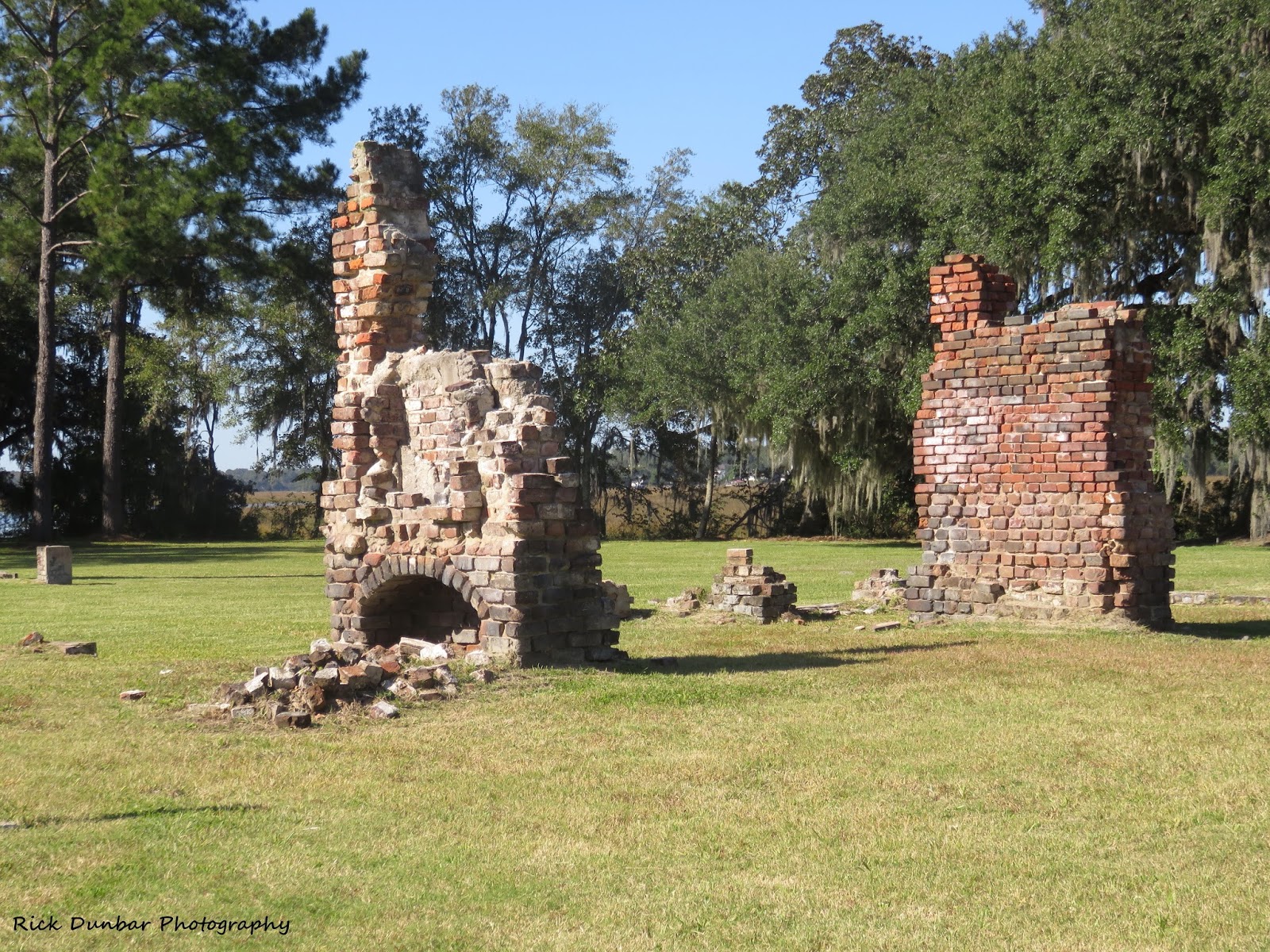
Pinckney rebuilt the home a third time. It was rumored to be one of the only country style Victorian homes in the Lowcountry. In 1995, it was purchased by the Whitfield's. The grim specter of fire revisited Runnymede again in 2002 and destroyed the home built by Pinckney. All that's left of the mansion is a partial outline of the home's perimeter, the brick entry steps, remnants of the brick fireplaces,


and the towering, two story chimney from the kitchen house.


Runnymede Plantation has a storied history interwoven with the folklore and superstitions of plantation living as big as its onetime 1,457 acres. One story tells of an African/American burial ground located deep within Runnymede's thick centuries old forests and an age old custom of placing personal items owned by the deceased in life on their graves--a custom with African roots. Items like plates, saucers, and drinking glasses if it was a woman or tools if it was a man, but not excluding items like a favorite chair.


The removal of any of these types of personal items from the graves of a dead person would result in consequences too terrible to imagine implicating swift retribution from the offended spirit. A belief implicitly held by hundreds of people living in the Lowcountry of South Carolina--including those who lived on Runnymede Plantation.


The plantation has a thick, untouched canopy of century old trees, numerous ponds and creeks, an unobstructed view of the Ashley River, and a unique place in Charleston's ancient and colorful plantation history.

A hauntingly powerful Southern tale from Runnymede's past: One September afternoon, two brothers from Charleston visited Runnymede Plantation for an end-of-summer outing; they were leaving the next morning to attend school in another state. One of the chief amusements enjoyed when visiting the old plantation was exploring its river and marshland setting in search of Lowcountry wildlife, such as the prowling alligator and abundant water fowl.

The two brothers were on such an excursion, an excursion that took them deep into Runnymede's surrounding forest where they happened upon an old slave burial ground. On the mounds of earth above where the remains of the people were buried, personal items belonging to the deceased person had been carefully placed. There were items like plates, cup and saucers, drinking glasses and favorite tools. Other items included such things as a favorite chair, a bottle of medicine and a spoon no doubt used to administer the medicine.

The brothers knew of the custom and the beliefs associated with the burial ground, but considering the beliefs to be just foolish superstition, they decided to play what they thought to be a humorous prank and disregarded what many Lowcountry people implicitly believed--the removal of an item from a grave or tampering with it in any way would bring swift and deadly retribution from the offended spirit. They removed a drinking glass from one of the graves and took it back to their home in Charleston.

When the parents saw the object, they questioned the brothers about it. The two brothers confessed to the prank. The parents were disappointed at the actions of their sons and became very concerned. It was not that they believed in the customs and rituals, but their concern was the disrespect their sons showed toward the people on Runnymede and their beliefs--beliefs handed down to them from their ancestors.

The parents immediately contacted the plantation owners and they insisted the item be returned at once to the burial ground and placed in its original position. It was returned. Word of the prank had spread throughout the plantation population, but it was believed their actions to undue the prank to be too late. Vengeance was probably already at work.

The brothers left for school out-of-state the next day, but they did not make it to their destination without deadly consequences. When word reached Runnymede of their unfortunate consequences, it was of no surprise to the people who firmly believed in such things. It was not unexpected.

Runnymede Plantation is located between Middleton Place and Magnolia Plantation. Unlike its more popular counterparts, it is not open to the public. It is open to scheduled weddings, private events, and concerts. You can check out its Facebook Page.

Wednesday, February 11, 2015

Majestic Medway--Another Lowcountry Antebellum Plantation With A Summerville Link

In 1930's Summerville, only one solitary building stood intact amongst the rubble of what was once the block of buildings adjacent to the Town Square on the east side of South Main Street. Ominously destructive, the stormy winds of progress was the tempest of purpose. Among the debris of strewn bricks and tattered beams was the skeletal remains of the tunneled pathway that led to the old Arcade Theatre. The silent movies accompanied by piano and violin had become reticent. The solitary building was its replacement. Known by the town's residents as "The Show," the new theater was built by the Legendres.

Sidney Legendre, a member of a prominent New Orleans family, owned a house near Golf Rd on South Main Street. He and his brother, Morris, owned a string of theaters throughout the South. Their headquarters was in Summerville. Shortly after exploring Abyssinia for the American Museum of Natural History as part of the Sanford-Legendre Abyssinia Expedition in 1929, Sidney married the expedition's co-leader Gertrude Sanford. Many of the big-game heads she collected from 1923 to 1929 traveling the world as a big-game hunter in South Africa, Canada, and Alaska lined the auditorium walls of the new theater.

Gertrude became famous for her work as a spy in World War II and was the first American woman captured by the Germans, but pulled off a daring escape of which she tells about in a book she wrote entitled "The Time of My Life." Gertrude once said, "I don't contemplate life. I live it," and she did. In time, Gertrude and her husband amassed a large estate called Medway Plantation located in Mount Holly within Berkeley County. It is listed on the National Register of Historic Places.


Medway's imprint on the illustrious history of the Lowcountry is far reaching. Considered the oldest masonry residence in the Carolinas, the plantation's first home was built in the late 1600's on the Back River, a tributary of the Cooper River, by a settler from Holland named Johan van Arsens-- married to Sabrina de Vignon.


After his death, his widow married Landgrave Thomas Smith around 1687, who was appointed governor of the Province of Carolina in 1693 and was one of the wealthiest men in the Province.--It is believed the plantation was named "Medway" after the Medway River that flows near Exeter, England, the home of Thomas Smith. Then, it was sold in 1701 to Edward Hyrne, but went back to the Smith family when Hyrne defaulted on the mortgage. Despite this misfortune, Hyrne is credited with playing a role in the building of the original house. In 1984, the Hyrne family seal was discovered to be impressed into some of the bricks around a doorframe.

The property changed hands numerous times since until it ended up in the ownership of Peter Gaillard Stoney in the mid 1830's. During this time, it grew rice, but after abolition, growing labor-intensive crops like rice ceased to be economical. It also provided timber and produced the famous "Carolina Grey" bricks made from the local clay along the river bank. Much of the brick used in the construction of Fort Sumter came from Medway. As time passed, the rundown estate was used for recreational hunting.

While visiting the Lowcountry and horseback riding one day, the Legendres stumbled upon the neglected Medway. Speaking about their discovery, Gertrude later wrote, "Something about it haunted us both." In 1929, the Legendre's purchased the plantation for $100,000, restored the house and expanded the estate to cover 6,695 acres. Medway also has four guest houses, three staff houses, a lakefront lodge, a riverside boat landing, formal gardens and a stable. The plantation has served as a retreat for writers and artists in recent times. As an environmentalist, Gertrude turned it into a nature preserve before her death in 2000.


Medway Plantation is one of ten haunted places in Berkeley County. It is believed to be haunted by a grieving young bride whose husband died on a hunting trip. According to legend, the young hunter was mistaken for a deer and killed. His young bride reportedly cried herself to death inside the historic home.

After returning to Medway for the first time in years, Bokara Legendre recounts the first night she spent in her redone bedroom. "There was a problem with the fireplace, and the chamber filled with thick black smoke. As a member of the plantation staff put out the fire, he glimpsed an apparition." In her redecoration of the antebellum mansion, Bokara added abstract paintings and a pastel color scheme. Horrified by the notion of killing animals for sport, she also took down her parents' trophy heads and put up her own impressionistic paintings of wolves.

Image by Katherine Wolkoff
Medway Plantation is another historic landmark with a Summerville connection. Shaded by giant oaks and climbing ivy, it is absolutely enchanting and beautifully haunting. Gertrude Legendre often quoted a sentimental poem written about Medway describing it as a place where "restless Time himself has come to rest." Bokara believes the apparition seen in her chamber and haunting the estate was her mother. Unhappy about some of the changes to the old house, it would appear to her daughter Gertrude has joined restless Time.

I wonder what Gertrude thinks of the removal of the big game heads from the theater her and her husband built on Hutchinson Square in Summerville?

Timber was the main source of revenue for Medway Plantation, but had never fully recovered from damage inflicted by Hurricane Hugo in 1989. The costs of running the plantation were enormous--more than $800,000 a year on average. Bokara wrote:
The money master came to lunch
It's always fun we laughed a bunch.
He said it's time to make a choice,
I heard a slight change in his voice —
"In seven years you will be
Dead or in penury."
Medway went on the market for $25 million. Time passed by without a buyer and Bokara made the decision to reduce the price asking $15 million.

In 2012, it was purchased for $11 million by Tradeland Investors Inc., owned by Gregory Callimanopulos and his family. Plans are to reintroduce wild quail at Medway and use the Berkeley County estate as a personal getaway and hunting retreat. It is not open to the public. It is not open to the public.

For more about Summerville go to Visiting Summerville.

Sunday, December 28, 2014

Once A Showplace Among Summerville's Distinguished Plantation Past

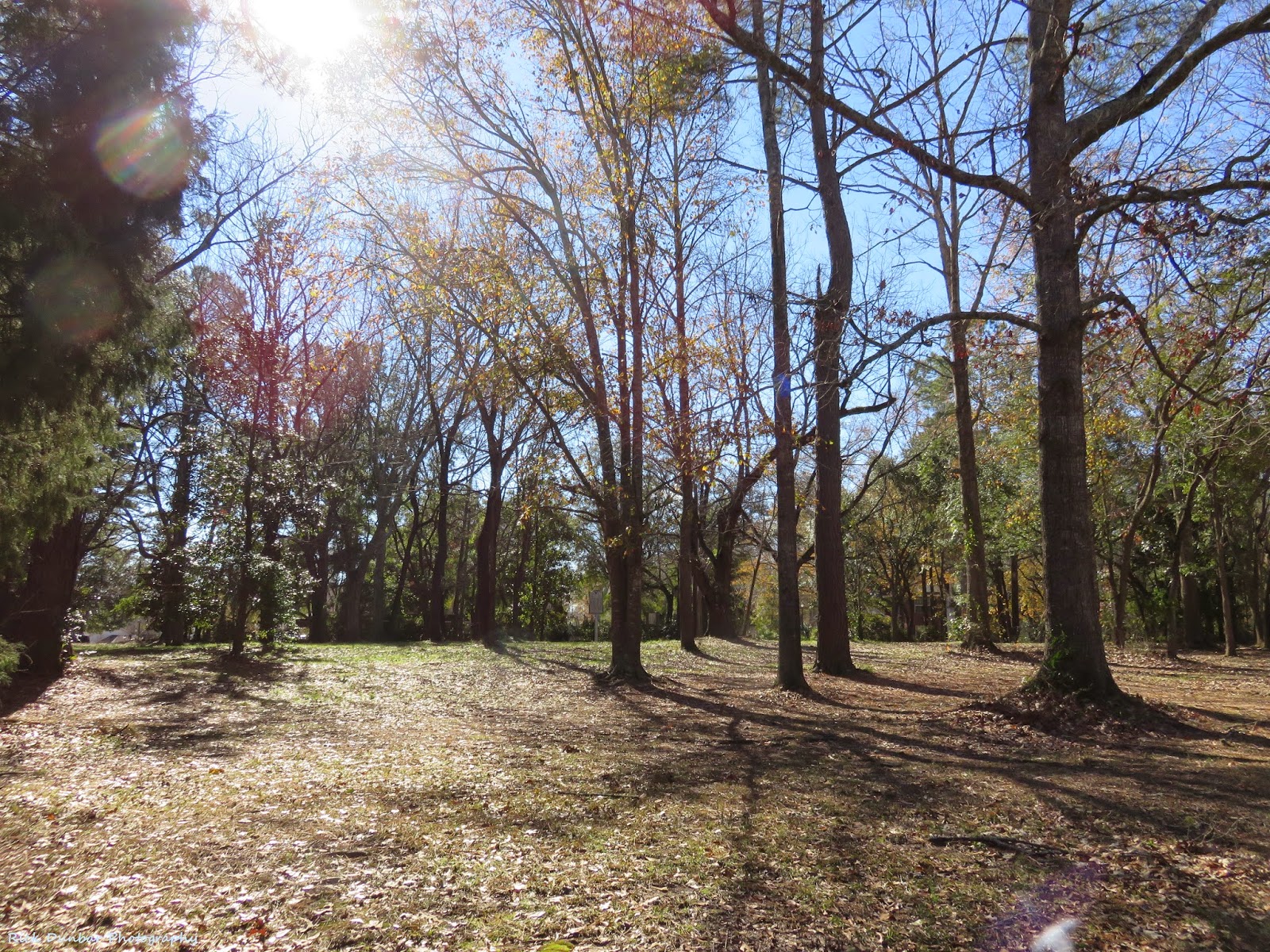
The azure rays of the winter's afternoon sun streamed through the gnarled branches of the numerous trees scattered around on the solitary, circular piece of landscape. As I surveyed the surrounding topography, the reason for selecting the site to build a house became obvious. It was the highest point on the sprawling 3000 acre royal grant, which was given to a merchant of London by King Charles II.

Over the span of its grand history, three different houses would grace the hilltop; the last would be considered one the largest mansions in the southern part of South Carolina. The land grant was known as the Newington Plantation, so named by Daniel Axtell after an estate in England.

To say the least, the Axtell family was a genealogical jigsaw puzzle. There were four different Daniel Axtells around the same time, not including the Daniel Axtell who was executed for the regicide of King Charles; also the father of the Daniel Axtell given the royal land grant by King Charles II, which became Newington Plantation.


Daniel Axtell, the grant owner, was married to Rebecca Holland and they had a son whose name was Daniel Axtell. Daniel Axtell, the son, died in 1681 on a ship bound for South Carolina from England; he was coming to visit his parents at Newington. Daniel Axtell, the grant owner, died three years later in 1684. Lady Rebecca inherited the plantation.

To make things even more complicated, a Daniel Axtell of Marlboro, Massachusetts moved to South Carolina in 1690 and became part owner of a saw mill in the area of what later would become Summerville. His wife's name was Thankful Pratt and they had a son named Daniel.

In time, Lady Rebecca gave the plantation to her daughter Elizabeth, but willed three hundred acres of the grant to Daniel Axtell from Massachusetts and to his son Daniel two hundred acres. Daniel Axtell from Massachusetts was the nephew of Daniel Axtell the owner of Newington, the land grant. By the way, Daniel and Thankful's first child was a girl named Elizabeth. So, there you have it, the Axtell enigma.

The first of the three houses was started in 1680 by Daniel Axtell, but after laying the wooden frame he died, never seeing its completion. In 1705, Lady Rebecca was granted 1000 acres of land on the north side of the Ashley River and around 1711 gave Newington to her daughter Elizabeth, whose last name was now Blake. Around 1715, the first house was burned in the Yemassee War, possibly by Indians. Sometime later, the second house was built. At the time, Lady Axtell was living in the house with Elizabeth and her grandson, Colonel Joseph Blake. The colonel was one of the richest men in the Low Country. As to the demise of the second house, one source says it burned and a second states it was reportedly removed by Colonel Blake to make way for the third house. The year was 1730.


It was a magnificent plantation home. Built with bricks and in the Georgian style architecture with elaborate cornices and moldings, it was called "the house with a hundred windows." The front overlooked grand English gardens with terracing and hedges and a large reflecting pond. The approach was lined with a double row of live oaks. It had an open floor plan in the southern style with a central hall flanked by four rooms, two on each side for maximizing air circulation during the hot, summer months. The second floor followed the same pattern with a great hall or ballroom. At the time of the Revolutionary war, the house was considered a showplace.

In 1837, the plantation was sold to Henry A. Middleton. It burned in 1845 and laid in ruins until 1876. In that year, Middleton leased the property to the United States government as an experimental tea farm, under the direction of Dr. Charles Shepard.


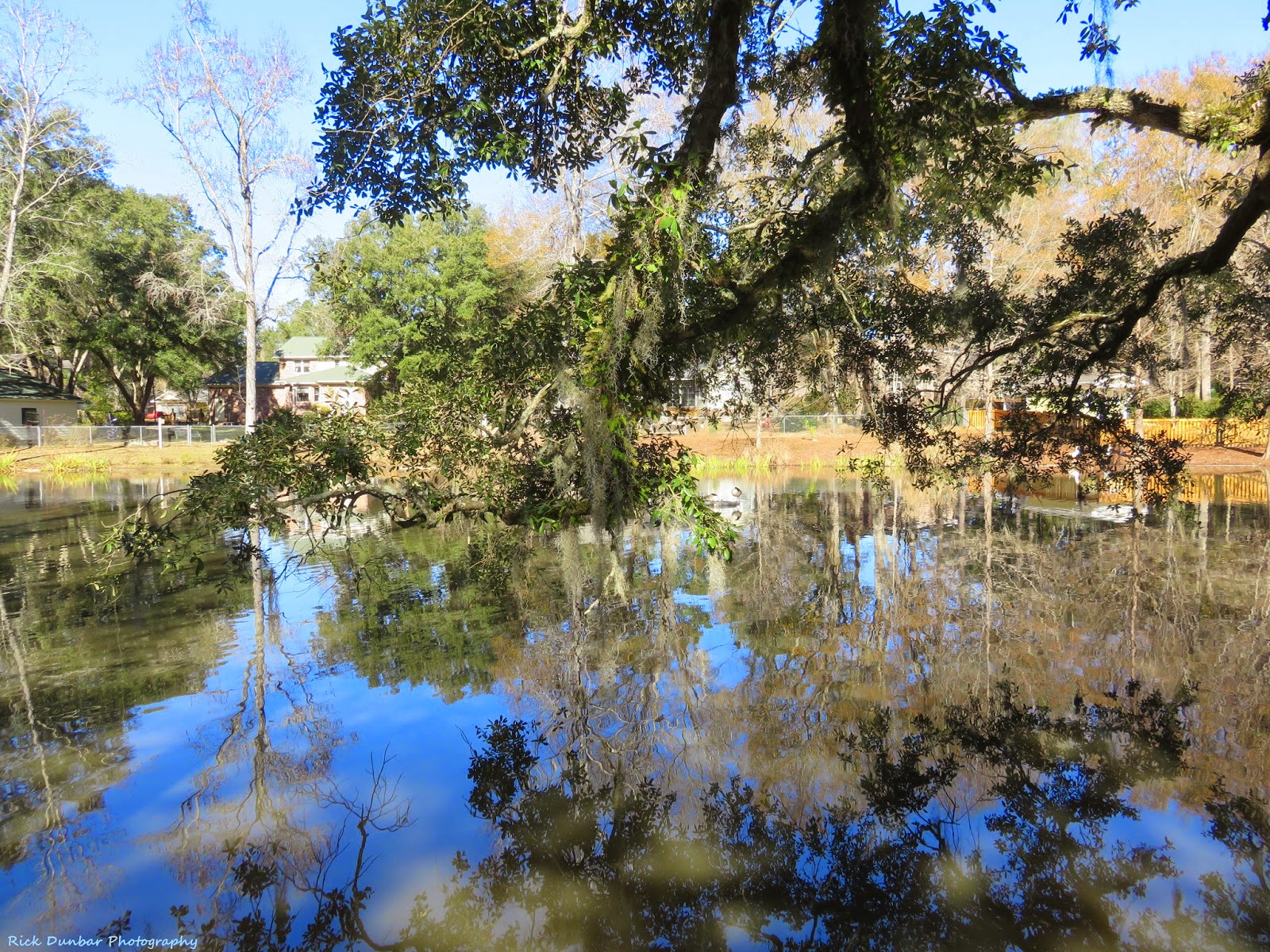
Newington is an intrinsic part of the distinguished plantation history of Summerville, as is the famous Pinehurst Tea Plantation it ended up a part of. The reflecting pond is all that is left, aside from the solitary piece of hilltop now encircled by a subdivision of homes.

Take the pilgrimage to the crest of the hill, circle its preserved grounds, walk among its remaining trees. Then, step back with the reflecting pond directly behind you and with you mind's eye scan the circular landscape. With the help of the historical record and a little imagination, the subtle outlines of "the house with a hundred windows" and its grand English gardens can be seen shimmering in the warm, azure rays of the winter's afternoon sun as they filter through the trees and wash over the aura of Plantation Circle.