
Sunday, February 24, 2019

South Carolina Waters Open Explorer Expedition #3--Lake Moultrie

South Carolina Waters Expedition #3 took us to the shores of Lake Moultrie, particularly the Hatchery Waterfowl Management Area. The weather was on the cool side and the skies were mostly cloudy on this late February day, so wildlife activity for the most part was at a minimal.

Upon arrival at the parking area, the expedition team scouted the area for the best location to set up and deploy the OpenROV Trident. A short hike brought us to the shores of Lake Moultrie where we discovered an intrusive plant growing on the beach and thousands of small clam shells along with evidence of the sad side of human activity and disrespect for the environment, trash was strewn all over the sand and adjacent vegetation.
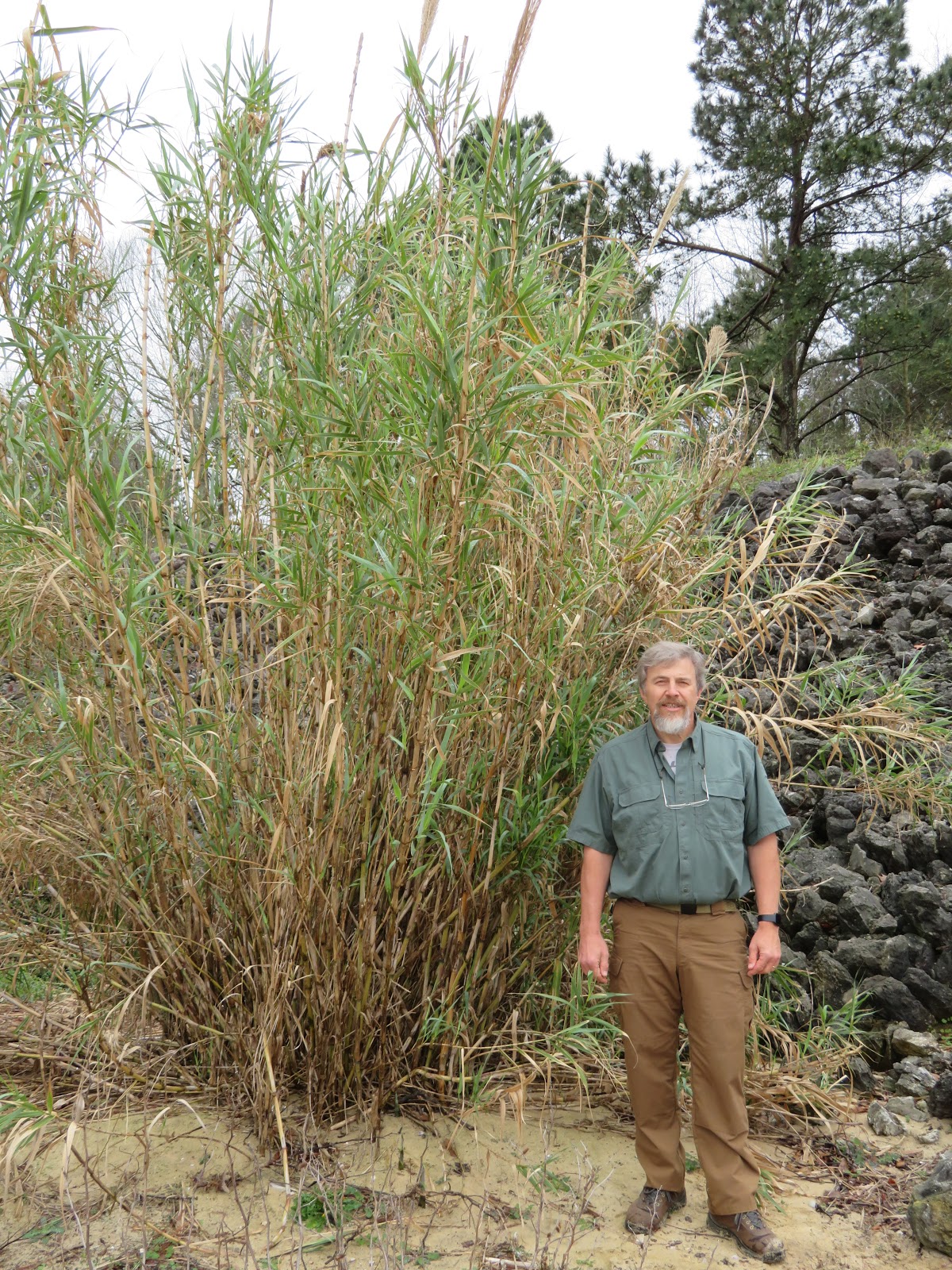
Intentionally or unintentionally, humans can impact their natural environment in several different ways, but for every action there is a reaction, and the consequences can either turn out for the good or for the bad. The formation of Lake Moultrie in South Carolina is an example of one way. In this case, the goal was to produce electricity for a growing population, which you would consider to be a good thing. Another way is through the introduction of foreign species, whether intentionally or unintentionally, into an ecosystem that offers no checks or balances for the intruder.

We encountered species not native to South Carolina that have found its way into the lake's ecosystem. Two of them producing adverse effects and one with a fascinating appetite, and the most likely culprit, human activity. One is a very intrusive plant, the second has had a destructive effect on the native clam populations, and the third is a mystery as to how it got here. The following video will discuss this in more detail.


While part of the team did some trash pickup, Rick Olson deployed his kayak to scout out a water impoundment adjacent to the beach where the waters appeared clearer than the other areas of the hatchery. As he kayaked the impoundment, he found a dead yellow-bellied turtle and tried to determine what caused its demise. There was no damage to the shell, but the turtle was missing an eye. A microscope was used and pictures were taken, but no conclusive reason could be found. Possibly, someone fishing may have hooked it.


We launched the OpenROV from two different spots and underwater video was taken. The bottom of the water impoundment was thick with seaweed and the props on the ROV had to be cleared several times. This is where Rick and his kayak played the integral role of retrieving and clearing the ROV of the intrusive seaweed, thus saving Dave Eslinger from having to get wet again.


Some of the seaweed was collected and pictures were taken with the microscope. Interestingly, small insects were found clinging to the foliage. Some samples were saved to be studied later. We look forward to viewing the underwater video in detail after it is uploaded for examination to see what was captured on our expedition to Lake Moultrie's Hatchery Waterfowl Management Area.

Following are some additional information about Lake Moultrie's freshwater clams:

Freshwater mussels serve as indicators of a healthy ecosystem. Mussels filter large volumes of water, removing food items such as algae, bacteria, diatoms and fine particulate organic material. It is a clear sign that something is wrong when mussels begin to disappear from a water body.

An invading species, such the Asian clam, competes with the native species for food and habitat resources. The Asian clam has been blamed for the decline and local extinctions of several native freshwater mussel species in the waters it has invaded, including South Carolina.

Native freshwater clam to South Carolina

Sunday, February 10, 2019

South Carolina Waters Expedition 2--Four Holes Swamp, Francis Beidler Forest

South Carolina Waters Expedition 2 took the team into the interior of South Carolina to a place called Four Holes Swamp--a dark tannin-stained slow-flowing river swamp known as a blackwater swamp and a tributary to the Edisto River. Thousand-year-old trees and native wildlife abound in this pristine sanctuary. There are over 70 species of reptiles and amphibians and 140 species of birds have been reported. As a bird watching photographer, you can really spread your wings.

Located in the heart of the Lowcountry between Columbia and Charleston, Four Holes Swamp is a 45,000-acre matrix of sloughs and lakes. It contains 18,000 acres of the largest remaining stand of virgin bald cypress and tupelo gum swamp forest remaining anywhere in the world. These wetlands are also home to the dwarf trillium (Trillium pusillum)--a rare flower found only in South Carolina at Four Holes Swamp.


Within Four Holes Swamp is the 15,000 acre National Audubon Society's Francis Beidler Forest where an educational center and a 1.75 mile self-guided boardwalk trail are located. The expedition team rendezvoused at the visitor center where we linked up with Mark Musselman, the Land Manager in Four Holes Swamp. Mark accompanied us on our trek over the boardwalk to Goodson Lake. Along the way, he shared with us his extensive knowledge of the swamp and with a sharp eye, pointed out the unique features of the swamp and its camouflaged wildlife--mostly the serpentine kind.


The launching point for the team's Trident was a two story observation deck deep within the swamp. Dave Eslinger unpacked the ROV and made the necessary connections. It wasn't long before our unusual activity drew the attention of curious visitors to the swamp, one of them being an inquisitive little girl with a boat load of questions, but Dave, a very personable individual, was willing to accommodate, thus fulfilling a primary objective of the team's explorations--to raise public awareness and appreciation for South Carolina's most cherished assets, its waterways and coastal estuaries, especially with the young.

The midday temperature was in the high 50's with only a slight breeze shuffling the branches of the surrounding ancient trees. With the overhead canopy open at this time of year, the sun shined through the upper branches onto the lower vegetation and the countless fallen trees strewn about in the dark waters. Not to far away, a nine foot alligator passively soaked in what sunshine was being made available to it. The ROV was launched into the black tea colored waters and it wasn't long before we were confronted with the complexity of the underwater world of the swamp.

As the Trident cruised along under the water taking some stunning video, the ROV's tether inevitably became entangled around the numerous submerged fallen logs and branches. Unable to get the ROV to surface, the unavoidable now faced the team--someone was going get "swamped today" and enter the 50-some degree water to retrieve the entrapped ROV, and that person was our pertinacious team leader. Stripped down to his undershorts, Dave entered the stimulating 8-foot deep water and after several attempts, successfully rescued the valuable Trident.


Unlike the clear, aqua blue waters of the tropics and coral reefs of the Caribbean, South Carolina's waters offer a greater challenge to operate an ROV in. Each expedition logistically teaches us something new, preparing us for the challenges to come on future expeditions.

Highlight: If you watch the underwater video very carefully you will see the ancient predator fish called a bowfin.


South Carolina Waters
National Geographic Open Explorer
S.E.E. Initiative


Team member Rick Olson kayaking Four Holes Swamp.


Thursday, January 31, 2019

South Carolina Waters Expedition #1--Trident OpenROV Underwater Video On The Ashley River

After viewing the Trident OpenROV underwater video of our first exploratory practice expedition on the Ashley River, we were delightfully surprised to see it was more successful than we originally thought--the camera picks up what the eye does not.

With the wind, the current and the murky waters of the Ashley River, it was a real challenge for David Eslinger to maneuver the Trident into strategic positions for ideal images. Controlling the sensitive Trident takes a real knack and its smooth operation is an acquired skill that will only get better with experience.

We did learn the Ashley River bottom, especially around the docks in Bristol Marina, is quit barren and eerily foreboding--void of bright colors. There was no plant life to mention and the silty bottom is littered with abandoned shells and shiny objects.


The Ashley River's waters are thick with suspended particles catching a ride on the constantly moving current--to be expected of a tidal river where debris is constantly flowing in from Charleston Harbor and out from upstream runoff coming down from Dorchester. The hidden world beneath its shimmering surface is visibly cold-blooded in many ways--psychologically and metabolically, except for the occasional frolicking dolphin and rarely seen unhurried manatee.

Some of the more common species of fish that frequent these waters are the Atlantic croaker, southern flounder, striped mullet, red drum, spot fish and spotted seatrout. Although, we did not see any marine species around the docks, while cruising the river we did see some bottlenose dolphin.


Diabolically lurking in these waters is an menace of the microscopic kind, persistent organic pollutants. Previous Charleston studies found high levels of these pollutants in the areas visiting dolphins. Dolphins are considered a sentinel species for monitoring the health of the environment and signaling emerging public health issues.


The sunken sailboat, well, that was another story. Its mysteries for now remain hidden. Maybe, someday we will return when our skills have been honed more precisely to unlock its aging story.

Saturday, January 26, 2019

"The Red Velvet Cake War" Now Showing--You Can Have Your Cake And Eat It Too

The Flowertown Players proved you can have your cake and eat it to as they served up full slices of sweet red velvet comedy Texas style to a hungry-for-more audience on their opening night presentation of The Red Velvet Cake War.

Trio Nicholas Hope, Jamie Wooten, and Jessie Jones, collectively known as JONES HOPE WOOTEN, wrote The Red Velvet Cake War. With a reputation of being three of the most popular and widely-produced playwrights in the United States, the threesome have built a large following of loyal fans and have been dubbed "America's Playwrights" with credits in classic television, hit movies, and Off Broadway comedy. They specialize in creating vivid strong roles for women as you will see in this woman dominated comedic parody.

Gaynelle Verdeen Bodine is distraught with anxiety and on the verge of a full blown meltdown. She has problems with her wayward husband and has taken things into her own hands by "accidentally" crashing her minivan through the bedroom wall of her husband's girlfriend's doublewide. As a result, her sanity is questioned by certain people in her hometown of Sweetgum. She is joined by two cousins with issues of their own. Peaches Verdeen Belrose, a saucy sort, is struggling to decide if it's time to have her long-absent trucker husband declared dead and Jimmie Wyvette, an uncultivated filly, is on the verge of fisticuffs with a snooty neighbor named Bitsy for the affections of Sweetgum's newest widower. On top of all this, the three of them have taken on the challenge of the family reunion and Gaynelle has wagered her house in a bet she can make a better red velvet cake than her fussing and fuming Aunt LaMerle. Things spin hilariously out of control as the wildly eccentric Verdeens gather for the event referred to as "a white trash jamboree" where a neighbor's pet devours everything edible, a one-eyed suitor shows up to declare his love, and a tornado strikes.


Director Sue Vinick said this about comedy, "From the outset, directors need to find actors who have a sense of the absurd...additionally, comedic actors must strive to be natural." I would have to say, "Job well done." Sue found the actors who possessed those necessary qualities. Under her direction and assisted by Larry Spinner, the play unfolded the way JONES HOPE WOOTEN would have desired with the characters and relationships fully developed. Everyone had a purpose and everything had a place. The sometimes frenzied scenes were all orchestrated without a noticeable glitch from the timely jokes to the constantly changing scenes and visual sight gags. The setting, Gaynelle's house, was well designed with accenting props and the costumes were fittingly fashioned for the plays characters.


The plays three main actors, Heather Hogan, Sarah Daniels, and Dianne Corban, provided the necessary ingredients for a winningly successful showing of this half baked Texas style dare I say redneck spoof that covers the full spectrum of what it is to be somewhat maladjusted. Blue-jeaned, plaid shirted Heather Hogan--whom I refer to as the face that launched a thousand expressions--sporting pony tails and a unibrow as the rough-and-tumble tomboy Jimmy Wyvette, whipped up the cake batter oozing with confectionery hilarity. Sarah Daniels, playing the functionally dysfunctional Gaynelle, adeptly stirred in the essential-to-the-plot figurative red dye and Dianne Corban, as the flirtatious Peaches with needs of the sexual kind, supplied the eye-popping frosting as she thickly ladled her delightfully charming self over the stage.


However, the threesome could not have pulled it off without the equal to the task supporting cast. As the cousins irrepressible and good natured almost ninety Uncle Aubrey Verdeen, Barry Gordon delivered on cue some of the plays more memorable tongue-in-cheek one liners with comedic artistry. Veteran actor Chad Estel garnered his share of chuckles with his rendering of the one-eyed Newt Blaylock. When he wasn't chasing the ladies around, he was crawling on the floor looking for his recently purchased under-sized eyeball. And there is Rhonda D. Kierpiec. Just one look at her and you knew she was the perfect choice for the holier than thou harpy, Aunt LaMerle.


Rounding out the cast, Joy Springfield provides some fireworks as the priss-pot Bitsy Hargis and Kerry Bowers plays the court appointed German accented psychologist Elsa Dowdall. With a mile of a smile, Jennifer Post doubles as the sassy and stylish hostess Cee Cee Windham of the show Hospitality House and Mama Doll Hargis and Fred Hutter doubling as Sheriff Grover Lout and Purvis Verdeen.


To coin a phrase from the play, "Don't paint pictures we can't scrub off the walls of our memory," The Red Velvet Cake War painted a picture that will be remembered within the walls of the James F. Dean Theatre for a long time. In many ways, it reminded me of skits from the once upon a time outlandish show called Hee Haw, only funnier. By the way, the winning red velvet cake had a fourth ingredient added to its mix, but you will have to sit through the whole crazy affair to find out what that is. However, you will laugh your bleeping *** off along the way to the arrival of that portentous moment.


"The Red Velvet Cake War" runs at 8 p.m. Jan. 25, 26 and 31 and Feb. 1 and 2. There are 3 p.m. performances Jan. 27 and Feb. 3. Tickets are $25 for adults, $22 for seniors, military and first-responders and $20 for students.

Saturday, January 19, 2019

South Carolina Waters Expedition--The Ashley River Baptism

Practice makes perfect was the calling of the day on the prestigious Ashley River just before it makes its entrance into Charleston's deep water harbor at White Point Gardens. It would be the maiden voyage for the expedition team's recently acquired Trident ROV into South Carolina waters. The main target of the preparatory National Geographic Open Explorer exploration into the rivers murky liquid was a casualty of a past hurricane, a solitary sunken sailboat. Launching point was Bristol Marina.

You couldn't ask for better weather for mid-January with temperatures in the sixties and considerable sunshine. We rendezvoused at Rick Olson's boat, the expedition team's home base, where we discussed objectives, strategies, and equipment. The Trident was unpacked and readied for a trial run around the marina's docks. Team leader Dave Eslinger discussed the ROV's features, controls, and video capabilities with the team members.

The Trident was then launched and we got a view of the marina's pluff mud bottom dotted by various abandoned sea shells. After the quick run, the equipment was loaded unto the Sea Hunt where team mascot, a Golden Doodle named Willow, waited patiently and the necessary safety checks were made.


Leaving the protective confines of the Bristol Marina behind, it wasn't long before we passed under the historic Ashley River drawbridges of Highway 17. We could hear the loud traffic overhead zipping past on their metal grating. The first, a one way span built in 1926, is known as the Ashley River Memorial Bridge--dedicated to the lost soldiers of World War I and one of four remaining bridges of its kind in South Carolina. The second, a bascule bridge built in 1961, was named after T. Allen Legare--a Charleston lawyer and senator. After slipping past the next bridge in line, the concrete span of the James Island Expressway, our target came into view.


Sitting in about twenty-seven feet of water at present--depth changes with tide--the solitary mast of the sunken sailboat rose out of the Ashley River across from the City Marina. Time was nearing the beginning of the high tide cycle. Our excitement was peaking in anticipation of getting some good underwater video and possibly marine life using the boat for cover.

The Ashley River was once an important water thoroughfare for upriver plantations Drayton Hall, Magnolia Gardens, Runnymede, and Middleton Place in Summerville--an upstream town recognized as an important summer refuge for plantation owners escaping the heat and mosquitoes of downstream Charleston. Their cash crops were indigo, cotton, and rice, with rice the most popular.

Navigating and anchoring the boat into an optimum position in the afternoon breeze and changing tide was a little tricky. We changed our proximity and deployment of the ROV several times throughout our exploratory practice. If anything, it was a golden opportunity for team leader Dave to hone his skills at controlling the feisty Trident. Needless to say, the restless tidal current kicked our butts and the demised sloop was a formidable opponent to tangle with in the murky waters, literally.

With our first mishap recorded in the log, including someone getting wet, we have something to look back on and enjoy a good laugh. Though it wasn't a perfect beginning and we weren't able to get any underwater video of the sailboat, we considered it a success. We learned some lessons, equipment was tested, and the Open Explorer ROV had its baptism into South Carolina waters. Enjoy the video as we share our first preparatory excursion we'll call The Ashley River Baptism.

Sunday, January 13, 2019

Kayaking the Restless Edisto River With Edisto River Adventures--Excursion Number 3 In The Series

This time of year one never knows what kind of weather will greet them on the rise of each day's sun, and this day was no different. It was a brisk morning for kayaking on the longest free-flowing blackwater river in the nation with Edisto River Adventures and a hardy group of about 25 paddlers. An eight mile excursion on flood level waters, it was anything but a lazy trek down the ever restless Edisto.

The excursion participants met in Colleton State Park where hosts Earl and Julie of Edisto River Adventures greeted us with warm smiles and introductions were exchanged. Our group of five feasted on a breakfast package consisting of a cheese, bacon, and egg sandwich with an assortment of fruit provided by Brad Mallett of Coastal Coffee Roasters.


From there we drove to the launching point at Minnie Gruber Rumph Landing, unloaded the kayaks, and transported vehicles to the end point, Mars Old Field Landing. While we awaited the drivers return, we familiarized ourselves with fellow kayakers and shared some light chit-chat. After the drivers were shuttled back, our host guides shared important safety tips and instructions on what to do in case someone should happen to overturn in the fast moving, cool waters. Then, one by one we entered the river.

The current was tenacious and unyielding as we brushed past fallen trees and submerged obstacles. Although the natural colors of the surrounding vegetation were muted due to the overcast January sky, our brightly colored kayaks were unmistakably conspicuous navigating the twists and turns. Except for three vultures, the typical wildlife was eerily missing, perhaps tucked away for the moment in warmer fringes. A tranquil hush enveloped us like the low hanging branches we passed closely under in the narrow wooded corridors of an adjacent swamp called Indian Field. The scenery through the largest old-growth stands of tupelo-cypress in America was splendidly alluring from start to finish.
This is just one of a series of six paddles called Discover the Edisto River Canoe and Kayak Trail featured by Edisto River Adventures, each beginning where the other one left off. This was number 3. Sign in was at 7:30 am. If you need a kayak, rentals are $45. If you have your own, a donation of $10 is accepted to offset shuttle expense, for the entire series. I highly recommend you join us for the next paddle in the series.


Edisto River Adventures is a full service outfitter with kayak trips, tube trips, paddleboarding, camping, and guide services. Owners, Earl and Julie, are hospitable and accommodating. Their knowledge of the river is indispensable and vast. Their staff, Mary Bell and their son, are helpful and always available to assist you in whatever you need from the excursion's start to finish.


Edisto River Adventures' outpost is located approximately 2 miles down river from Givhans State Park at 153 Gator Walk Rd, Ridgeville. Contact number is 843-695-8146.

Sunday, January 6, 2019

South Carolina Waters Expedition--A Key Piece Of Grant Funded Equipment Has Arrived

Charleston is home to some of the busiest waters on the southern coast from the daily flow of massive ocean-going container ships to the hundreds of considerably smaller paddleboarders leisurely gliding in and around its estuaries and beaches. Add to this, a cruise ship will periodically slip into port with its load of vacationers hungry to soak in the city's harbor views and peninsula history. For sure, there is a lot to be experienced above water level, but silently overlooked is the abundance to be discovered and shared below its murky coastal waters, historically and ecologically.

Compared to clear water, murky water is characteristically home to an abundance of living organisms, including phytoplankton (a flora of freely floating minute organisms and a key part of oceans, seas and freshwater basin ecosystems) and zooplankton (jellyfish, crustaceans, and other ocean-wandering animals). Sediments also play a role. Along certain coasts, easily agitated finer particles like sand and silt will stay afloat for longer periods adding to the water's murkiness. On the other hand, the sediments off clearer coasts may be heavier and coarser. Instead of fine sand, these sediments are often made up of things like pieces of shells and chunks of dead coral, which are often tougher to stir up. Murky Bulls Bay of the Cape Romain National Wildlife Refuge contains the cleanest, richest waters in the world. Notably, Charleston's waters are also rich with the oozy, gooey, viscous substance locals fondly know as pluff mud.

This is the kind of environment the exploration team of the South Carolina Waters Expedition will be performing in as they explore Charleston's waters from salty coastal marshes up brackish tidal rivers for a glimpse of its sunken ships, flooded ghost towns, submerged relics, and unique marine inhabitants. To see in this type of ecosystem, the team will need some specialized equipment. This key piece of equipment to augment the team's visual capabilities has finally arrived--the OpenROV Trident.

Outfitted with a 1080p camera protected by a hardened sapphire lens, the Trident will provide the essential instrumentation for acquiring the fascinating videography the exploration team plans on sharing with its interested parties and followers. Specifically optimized for underwater filming, its great low-light performance and a wide viewing angle supported by advanced color correction algorithms will further allow the exploration team to observe Charleston's diverse aquatic life and collection of hidden underwater treasures in all its murky colors--ideal for exploring its nutrient rich estuaries and tidal rivers.

The Trident can be extended to include custom sensors or modules as add-ons which can be bolted to the payload area and interface with the main vehicle via WiFi. A phone or tablet can be used to control the drone and stream live HD video.

It will take some practice sessions to master Trident's highly tuned electronic speed controller with its rugged brushless motors capable of reaching speeds of up to 2 m/s for a quick descent as far as 300 feet or glide silently at slow speeds to carefully observe the murky and mysterious underwater environment it will be traversing.

Enjoy the expedition team's first video of team leader Dave Eslinger unboxing and showcasing some of the Trident's features, and stay tuned for upcoming videos of practice sessions as the team familiarizes themselves with its advanced autopilot features and fine tunes their operating skills.


The Expedition Team: Dave Eslinger, Rick Olson, Adam Stover, Paul Zoeller, Brad Mallett, and myself.